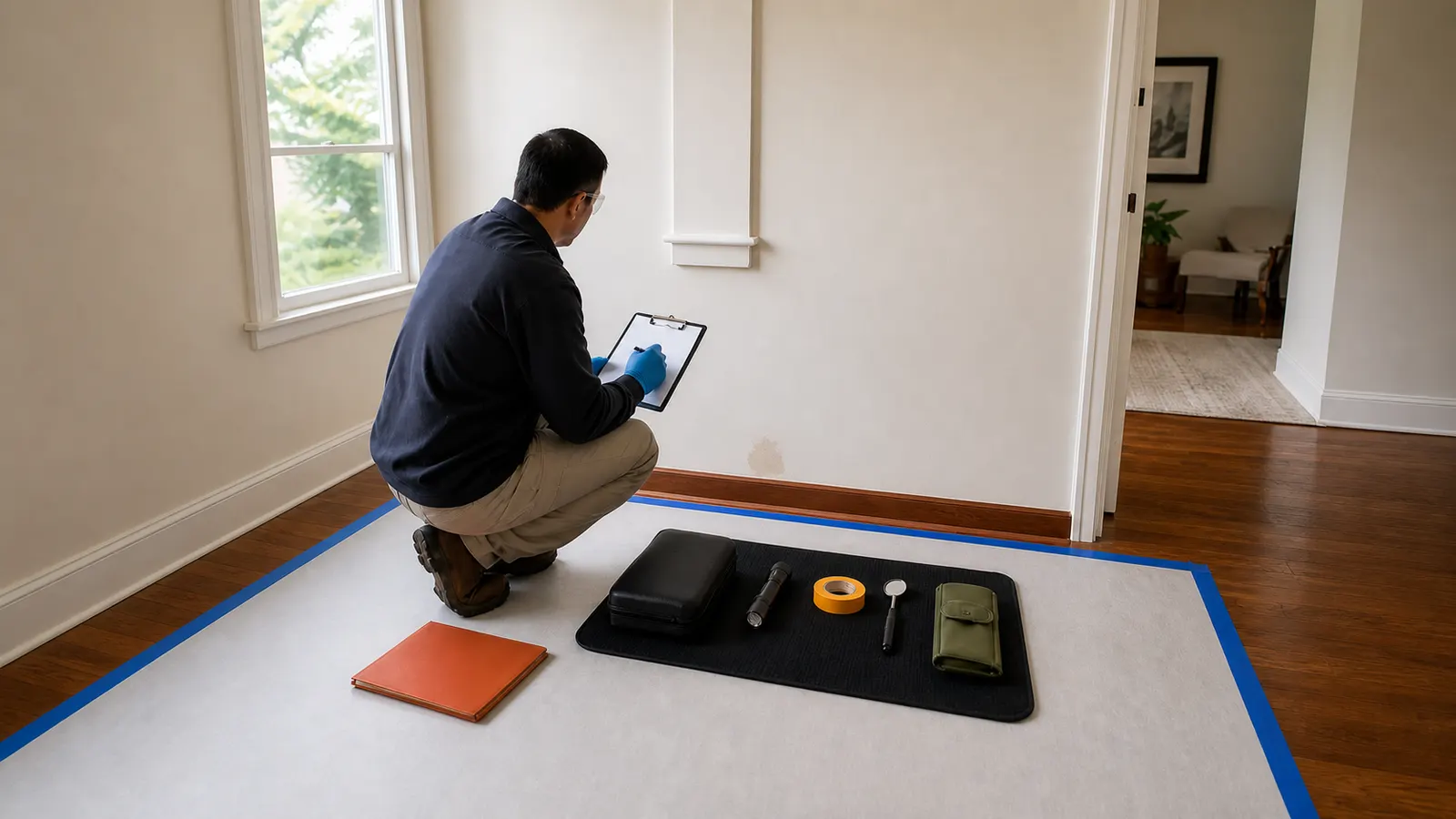
Guidance and local rules checked August 8, 2026. This article uses current EPA and CDC pages, current Gypsum Association publication listings, an opened GA technical bulletin, and live San Jose permit text. It is scheduled for annual review because agency guidance, publication editions, and local permit rules can change.
| Observed condition | Starting direction | What still has to be proved |
|---|---|---|
| Confirmed uncontaminated leak; prompt response; no swelling; seams intact | Evaluate drying in place | The source is eliminated, both faces and the cavity can dry, insulation is addressed, and final inspection finds no damage or mold. |
| Uncertain source, sewage, outdoor floodwater, or chemical or biological contamination | Do not use the clean-water path | CDC and GA guidance direct removal of drywall exposed to sewage or floodwater; containment, PPE, and the broader assembly need a qualified plan. |
| Swelling, soft or crumbly core, sagging, delaminated paper, open seams, rusting fasteners, or physical damage | Remove damaged board | Inspect framing and adjoining layers, then restore the original wall or ceiling system. |
| Visible or suspected mold on the face, back paper, or in the cavity | Shift to remediation | Define the full affected area, protect occupants and workers, remove contamination that cannot be cleaned, and verify completion before closing. |
| Wet fiberglass or cellulose insulation; closed cavity cannot be ventilated or inspected | Selective opening likely | EPA's clean-water table says to discard fiberglass and cellulose insulation; enough finish must be opened to remove it and verify drying. |
| Fire-resistance-rated or sound-rated wall or ceiling | Design-specific repair | Identify the assembly and restore the complete documented design. GA-231 specifically names board type, fasteners and spacing, and staggered joints; San Jose requires a permit for fire-rated sheetrock. |
Start with what the water touched and where it came from
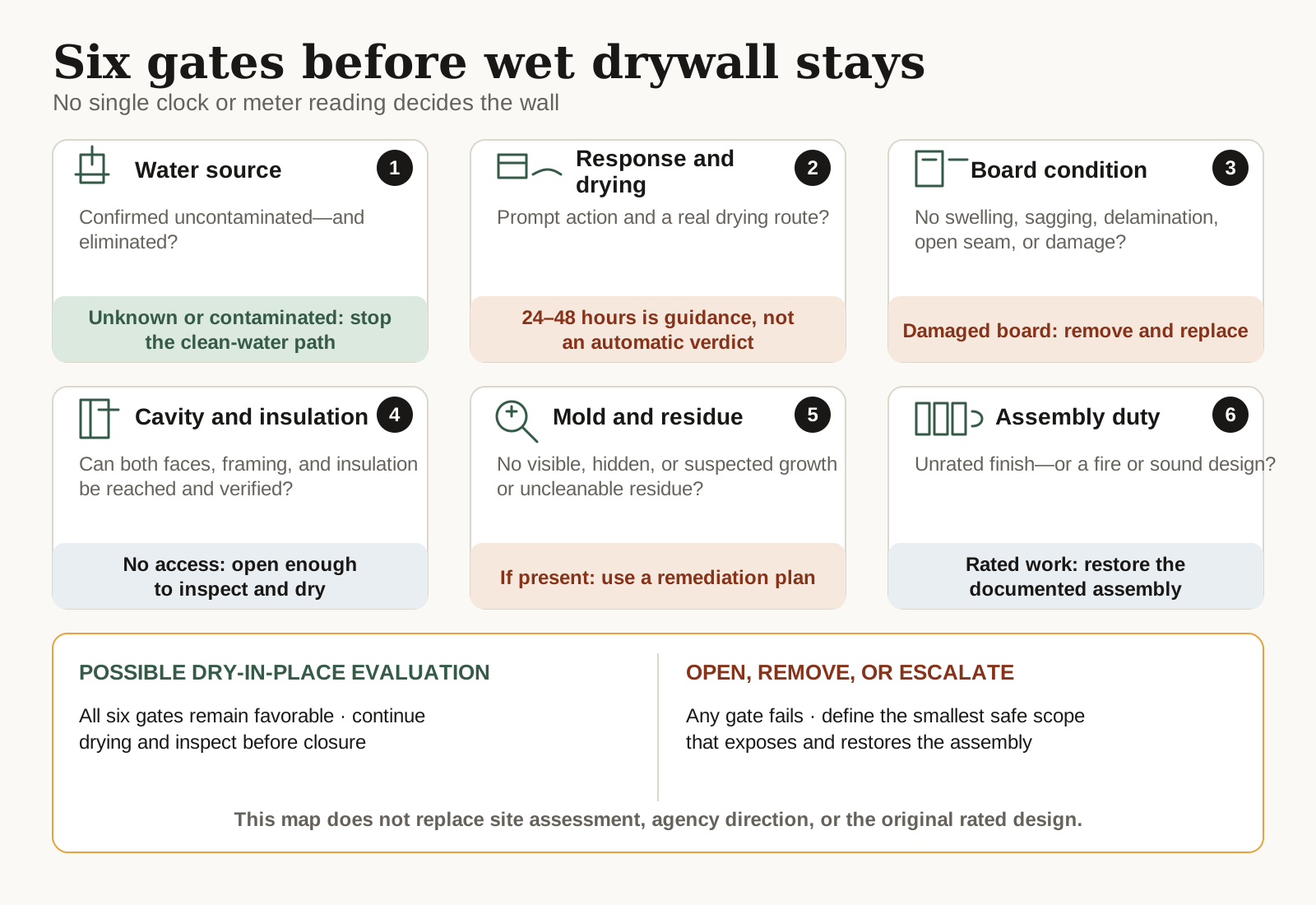
A supply-line pinhole, roof leak, overflowing fixture, drain backup, and flood can leave similar stains but require different responses. EPA's wallboard drying guidance is expressly for clean-water damage and says not to use fans until water is determined clean or sanitary. CDC directs removal of drywall and insulation contaminated by sewage or floodwater.
Trace, stop, and document the source and its path through soil, cavities, drains, fixtures, pans, chemicals, or other materials. Unknown water is not confirmed clean water. The current GA-231-2025 listing says source, duration, temperature, and board condition all affect replacement; when doubt remains, replace the board.
When drying in place is a defensible option
EPA's current water-damage table says wallboard may be dried in place when there is no obvious swelling and the seams are intact; otherwise it should be removed, discarded, and replaced. It also says to ventilate the wall cavity if possible. The agency's Mold Course repeats those conditions and limits that lesson to clean-water damage.
The opened 2019 edition of GA-231 is more conservative. It says wet gypsum board should be replaced unless every listed condition is met: the source is identified and eliminated; the water was uncontaminated; the board can be thoroughly dried before mold growth begins; and the board remains structurally sound without rusting fasteners, paper delamination, or physical damage that diminishes the board or system. The current GA-231-2025 product page retains the source-duration-temperature-condition framework and the replace-if-in-doubt instruction.
A drying-in-place evaluation needs all of these facts, not just a fan pointed at paint:
- Source and water: the leak is stopped and the event qualifies for clean-water guidance.
- Panel: the face, accessible back, edges, seams, fasteners, and ceiling plane remain sound.
- Drying path: the cavity is ventilated or opened enough to dry and inspect.
- Other materials: wet insulation, backing, trim, and framing are separately addressed.
- Closure: documented comparisons and final inspection find no remaining wetness, damage, visible mold, moldy odor, delamination, or failed seam.
The 24–48-hour language is not a universal tear-out rule
EPA presents 24–48 hours as a quick-response mold-prevention target. Its footnote says growth may occur within that period and may not occur after it; the time is a guideline. CDC also urges drying within 24–48 hours if possible. These statements establish urgency, not proof that every panel at hour 49 is contaminated or every panel at hour 23 is acceptable.
When drywall must come out or the simple drying path ends
Sewage, floodwater, and other contamination
CDC's current disaster-cleanup page is direct: remove and discard drywall and insulation contaminated with sewage or floodwater. The Gypsum Association's technical guidance likewise says gypsum board exposed to sewage or floodwater must be replaced. Outdoor floodwater can carry sewage, agricultural or industrial waste, and other contamination, so a flood loss should not be reframed as a large clean-water leak.
Contamination changes PPE, containment, and removal. EPA says its clean-water table does not apply, advises experienced help when expertise is lacking, and says not to use fans before water is determined clean. Scope the affected cavity and adjoining porous material, not a convenient cosmetic cut line.
Loss of physical integrity
Swelling, sagging, a soft or crumbly core, delaminated paper, failed seams, rusting fasteners, or broken edges defeat retention. A damaged ceiling also presents a falling-material concern. Remove far enough to reach sound material and evaluate the assembly; source path, board layout, framing, insulation, contamination, and rated design (not a universal height) set the boundary.
Visible or hidden mold
Mold moves the project from ordinary drying into remediation. EPA shows that a normal-looking face can hide growth on back paper and says visible mold generally does not need sampling merely to establish cleanup. EPA has no federal mold concentration for clearance, and its area bands help plan methods, PPE, and containment rather than define health thresholds.
Limited surface growth on sound material differs from growth through paper, core, insulation, or a cavity. EPA's methods range from HEPA final cleaning to discarding unsalvageable porous material. If mold and mold-damaged material cannot be completely removed and verified without leaving compromised board or spreading contamination, remove it. Paint, caulk, or spray is not completion.
The cavity and insulation can force an opening
Water can run along back paper, plates, fasteners, pipes, wiring, fire blocking, and insulation beyond the stain. EPA calls the cavity difficult to dry, recommends ventilation when board stays, and directs discarding cellulose and fiberglass insulation. Sound board may therefore need a selective opening to remove insulation, inspect, and establish airflow.
Cabinets, tile, vinyl covering, multiple layers, insulation, channels, sheathing, and vapor-retarding finishes can block drying. Dry room air does not prove a dry cavity, but concealment does not justify automatic full demolition. Open the smallest controlled area that permits classification, removal, drying, monitoring, and sound reconstruction.
Fire-rated and sound-rated assemblies are not ordinary patches
Garage, dwelling-unit, corridor, shaft, and floor-ceiling separations may look ordinary. Fire and sound performance depends on the complete documented system, not a generic patch. The opened GA-231-2019 bulletin specifically names board type, fasteners and their spacing, and staggered joints; the current GA-600-2024 publication page catalogs hundreds of distinct rated systems. GA-225-2025 requires restoring damaged fire-rated systems to their original fire-resistant condition.
Identify and document the assembly before demolition. Equal thickness alone is not proof of restoration. San Jose exempts unrated sheetrock and joint taping but requires a permit for fire-rated sheetrock; structural and nonexempt trade work remain separate.
A defensible inspection, drying, and repair workflow
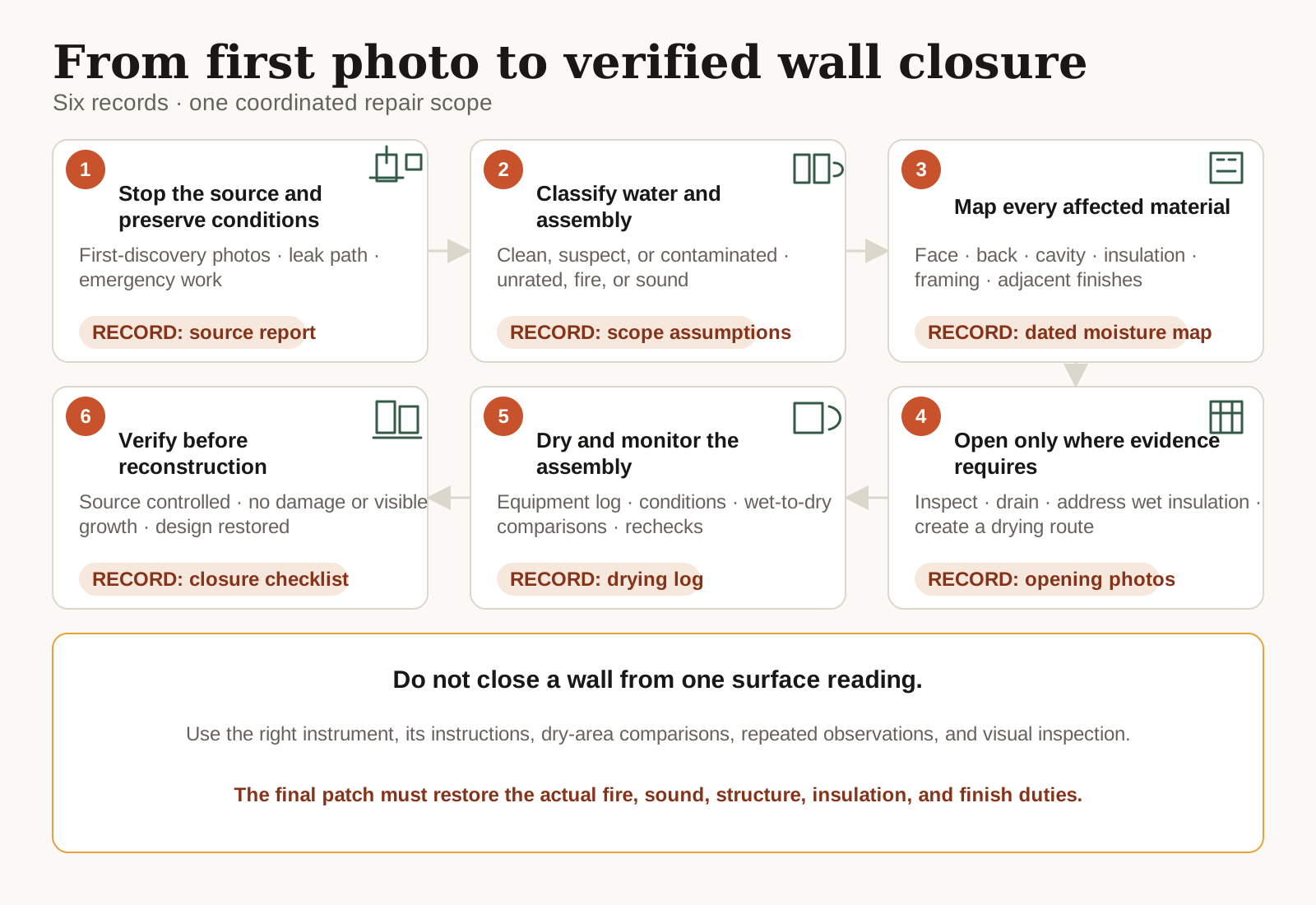
- Make the area safe and stop the source. Address active plumbing, roof, electrical, ceiling, and slip hazards through the appropriate trades. Photograph conditions before destructive work where safety allows. A water stain is evidence of a path, not a complete map.
- Classify the event and the assembly. Record the source and route, potential contaminants, discovery and response dates, rooms and levels affected, and whether walls or ceilings could be structural, fire-rated, sound-rated, insulated, tiled, or part of a wet area.
- Map affected materials. Combine visual inspection, source tracing, non-destructive scanning, appropriate comparative readings, and controlled access. Map drywall faces, insulation, framing, trim, flooring, cabinets, and adjacent rooms. Update the map when an opening reveals a wider path.
- Open selectively when access is necessary. Plan openings to expose the cavity, remove unsalvageable or contaminated porous material, establish airflow, and leave support for reconstruction. Protect occupied areas and use a remediation plan when mold or contamination is present.
- Dry and monitor the assembly. Use equipment appropriate to the verified water condition and building. Record operating conditions, equipment changes, material comparisons, and repeated observations. Do not direct ordinary fans through suspected contamination or close a cavity because room air feels dry.
- Verify and reconstruct. Confirm the source is controlled, retained board remains sound, affected cavities and framing meet the project-specific drying criteria, contamination and visible growth are removed, and no wet insulation remains. Restore board, insulation, vapor control, fire and sound details, penetrations, joints, texture, and paint under the correct permit and inspection path.
What a moisture meter can and cannot prove
A handheld meter can help locate wetter areas, compare suspect board with known-dry board, and track a drying trend. It cannot supply a universal drywall percentage that proves an assembly is ready to close. The opened GA-231 technical bulletin says many meters have not been shown accurate or reliable for gypsum-board percentage readings. It warns that salts and other materials can affect results and that a wood calibration does not make a valid gypsum reading.
GA says a useful field application is rank-ordering: compare areas known to be dry with areas suspected to be wet, using a properly calibrated instrument and its instructions. Even then, the numerical display may not represent the true moisture content of the gypsum core and paper. A complete decision combines instrument limitations, repeated readings, dry references, visual and tactile condition, cavity access, environmental data, source control, and the requirements of the material and assembly.
For the same reason, this article gives no universal drying duration. A small uninsulated interior wall with accessible faces, a painted exterior wall with insulation, and a multi-layer rated ceiling are different drying problems. Equipment capacity, temperature, humidity, air movement, material load, coverings, weather, and the leak path change the time. Publish the actual log and completion criteria instead of promising a generic number of days.
San Jose permit boundary: finish exemption is narrow
Current San Jose guidance and Municipal Code section 24.02.120 exempt taping joints and sheetrock installation for unrated walls and ceilings. The City page expressly says fire-rated sheetrock requires a permit. The same code warns that permit exemption does not authorize work that violates technical codes or other law.
A leak repair may also include work outside that finish exemption. Altered wall framing or other structural work requires a building permit. New or reconfigured plumbing, electrical, or mechanical work can require the applicable trade permit. The City lists minor leak repairs among plumbing exemptions but says replacement of a concealed trap, drainpipe, or vent pipe is new work requiring a plumbing permit. Confirm the whole scope with the City before covering the cavity; do not ask only whether the final patch is drywall.
Outside San Jose, use the actual jurisdiction. The City's building-permit application instructions warn that unincorporated pockets within San Jose are subject to Santa Clara County permitting. Other cities can draw different lines. Fire-rated, multifamily, commercial, structural, hazardous-material, and code-enforcement conditions warrant early written direction.
Who should decide what
The plumber, roofer, appliance technician, or envelope specialist identifies and corrects the source within its trade. A qualified water-damage or environmental professional classifies conditions, defines drying or remediation controls, and documents completion within its competence. An architect or engineer identifies structural and rated-system obligations when design judgment is needed. The building department decides permit and inspection requirements. The general contractor coordinates opening, access, trade sequencing, reconstruction, finishes, and the accepted documents.
Those roles should not collapse into one sales conclusion. The person renting drying equipment should not silently decide the fire assembly. The drywall installer should not classify unknown water as clean. A laboratory result should not replace source control and site inspection. An insurer's coverage decision should not be treated as a building-code or remediation clearance. Put the assumptions, exclusions, responsible party, record, and acceptance point beside each scope item.
Why there is no universal price or schedule
The visible patch is rarely the full cost driver. Source repair, emergency access, containment, contents protection, environmental assessment, wet insulation, cabinetry, tile, multiple gypsum layers, electrical or plumbing work, structural damage, rated assemblies, permit review, texture matching, and occupied-room phasing can change the scope. Without those facts, a per-square-foot drywall number would be false precision.
Drying and reconstruction also do not share one clock. Investigation can reveal a wider path; regulated material can pause demolition; rated details can require plans or inspection; equipment performance depends on conditions; and finishes should not cover an unverified cavity. A useful schedule lists decisions and dependencies with update points. It does not promise that every wall dries or rebuilds in a fixed duration.
Frequently asked questions
Does wet drywall always need to be replaced?
No. EPA says clean-water-damaged wallboard may be dried in place when there is no obvious swelling and the seams are intact, with the cavity ventilated if possible. That option still depends on source control, uncontaminated water, sound material, accessible drying, other wet components, and final inspection.
Is 48 hours the exact point when drywall becomes moldy?
No. EPA calls 24–48 hours a quick-response guideline and says growth may occur within that period or may not occur after it. The time supports urgency; it is not a universal biological or demolition threshold.
Can I keep drywall after a sewer backup or outdoor flood?
Not under the clean-water drying guidance. CDC directs removal and disposal of drywall and insulation contaminated with sewage or floodwater, and Gypsum Association guidance says exposed gypsum board must be replaced. The cavity and adjoining porous materials also need a contamination-focused plan.
Can fans dry a closed wall?
Not automatically. EPA calls wall cavities difficult to dry and says to ventilate them if wallboard is retained. Insulation, multiple layers, wall coverings, cabinets, or blocked airflow can require a controlled opening. Do not use ordinary fans until the water is confirmed clean and do not blow air through suspected mold.
What moisture percentage means drywall is dry?
No universal handheld-meter percentage is defensible. GA says gypsum readings can be unreliable and recommends careful calibration, instructions, and comparisons between known-dry and suspect areas. A closure decision also needs source control, material condition, cavity evidence, repeated observations, and assembly-specific criteria.
Can I paint over a water stain or mold after the wall feels dry?
A stain can be redecorated only after the source, drying, condition, and contamination questions are resolved. CDC says painting or caulking over mold does not prevent growth. GA calls for final inspection after drying and before redecorating.
Does a drywall patch need a San Jose permit?
Unrated sheetrock installation and joint taping are generally exempt under current San Jose code. Fire-rated sheetrock requires a permit, and framing or new plumbing, electrical, or mechanical work can trigger separate permits. Confirm the complete loss scope before concealment.
Sources and verification
- U.S. EPA: Water Damage, Cleanup and Mold Prevention, Table 1
- U.S. EPA: Mold Course Chapter 4, clean-water drywall drying and removal conditions
- U.S. EPA: investigating hidden mold, cleanup methods, meters, sampling, and completion
- U.S. EPA: Mold Remediation Guidelines, Table 2
- CDC: Guidelines for Cleaning Safely After a Disaster
- CDC: Mold Cleanup Guidelines and Recommendations
- CDC and federal partners: Homeowner's and Renter's Guide to Mold Cleanup After Disasters
- CDC Stacks: A Field Guide for Flooded Home Cleanup
- FEMA: current Homeowner's Guide to Retrofitting flood-repair publication
- Gypsum Association: GA-231-2025, Assessing Water Damage to Gypsum Board
- Gypsum Association: opened GA-231-2019 technical bulletin, hosted by member manufacturer PABCO Gypsum
- Gypsum Association: GA-225-2025, Repair of Fire-Resistance-Rated Gypsum Panel Product Systems
- Gypsum Association: GA-600-2024, Fire Resistance and Sound Control Design Manual publication page
- City of San Jose: When Is a Building Permit Required?
- City of San Jose: Building Permit Application Instructions and jurisdiction check
- San Jose Municipal Code Title 24, including sections 24.02.100 through 24.02.120
Every published health, technical, legal, or dynamic claim was checked against an opened agency page, primary technical publication, live municipal text, or current official publication listing. Search snippets, restoration-company blogs, product marketing, insurer rules, paywalled IICRC text, universal cut heights, generic moisture targets, and unsourced cost or drying-time claims were not used as controlling evidence.
General information only. This article is not medical, environmental, industrial-hygiene, engineering, architectural, legal, insurance, permit, drying-protocol, remediation, or bid advice. Water classification, hazardous materials, PPE, containment, selective demolition, structural conditions, electrical and plumbing safety, moisture instruments, drying criteria, rated assemblies, permits, inspections, price, and schedule depend on the actual property and accepted scope. Obtain written direction from the responsible qualified professionals and authority having jurisdiction before disturbing suspect material or closing a wall.