| What you see | Safe first response | What remains unproven |
|---|---|---|
| Water near a dry, closed air-handler cabinet | Pause cooling Use normal dry controls, isolate foot traffic, document, call HVAC | Clog, pan, pump, connection, ice melt, condensation, or another source |
| Water touches wiring, outlet, disconnect, motor area, or panel | Keep away Do not touch equipment or controls from the wet area; use qualified electrical/HVAC help | That power is off or the equipment is safe after drying |
| System stopped by itself during cooling | Do not reset Preserve the condition for qualified diagnosis | That a float switch exists, tripped, or proves a clog |
| Visible ice or frost | Cooling off Do not chip ice; call HVAC and plan for meltwater | Airflow, refrigerant, control, filter, coil, or drainage cause |
| Wet ceiling, wall, floor, carpet, or insulation | Drying scope Map moisture after electrical safety and source control | How far water traveled or which finish can remain |
What to do in the first few minutes
- Protect people before property. Keep children, pets, tenants, and foot traffic out. Water can make the floor slippery and can contact electrical equipment outside your view. Do not kneel in water or reach across a wet cabinet. If sewage, chemicals, or other contamination may be involved, keep everyone out and use a qualified cleanup professional.
- Decide whether a dry control is safely reachable. If the normal thermostat and your path to it are dry, set cooling to OFF. If water touches equipment, wiring, an outlet, a disconnect, or a panel, or you would stand in water, do not touch it. Call qualified HVAC and electrical help.
- Do not restart a system that stopped itself. Some systems can use an overflow switch to stop operation when water rises. Trane's current consumer page also says not every air handler has one. A shutdown may be protective, but it does not prove the switch, drain, or cause.
- Limit spread from a dry position. Move dry valuables away if that does not bring you near energized or contaminated areas. Use passive absorbent material only for visibly clean water, where contamination is not suspected and the material can be placed and retrieved safely. Do not plug in a wet/dry vacuum, fan, pump, or extension cord beside the water.
- Document before water disappears. Photograph the whole equipment area, water edge, ceiling and wall, adjacent rooms, visible drain piping, and thermostat status. Record when cooling last ran, whether it stopped, any ice, noise, odor, filter change, and prior leaks.
- Call the right first responder. A qualified HVAC technician should diagnose equipment and condensate. Add a qualified electrician if electrical parts became wet or safety is uncertain. Notify a landlord or property manager promptly in rented, multifamily, or commercial space.
If cooling must remain off during dangerous heat, move at-risk occupants to a safely cooled place and follow current local public-health guidance. Do not trade an immediate heat risk for an improvised electrical or refrigerant repair.
What AC condensate is, and why it can overflow
During cooling, moisture from indoor air can condense on a cold evaporator coil. The water is supposed to enter a drain pan and leave through the equipment's designed condensate path. ENERGY STAR includes condensate-drain inspection in a typical professional maintenance visit and warns that a plugged drain can damage the house and affect indoor humidity.
The path is not universal. Depending on the listed equipment and installation, it may include a primary drain, secondary opening, auxiliary pan, trap, vent, pump, overflow switch, exterior termination, plumbing receptor, or combination. Equipment position and pressure affect trap design. Never assume that the first white pipe, open tee, or outdoor drip is the correct access or that it should be capped.
EPA says cooling-coil pans should drain properly and substantial standing water or debris requires immediate attention. It also emphasizes moisture control because wet system materials can support biological growth. That supports fast service and drying, not a chemical recipe poured into unknown equipment.
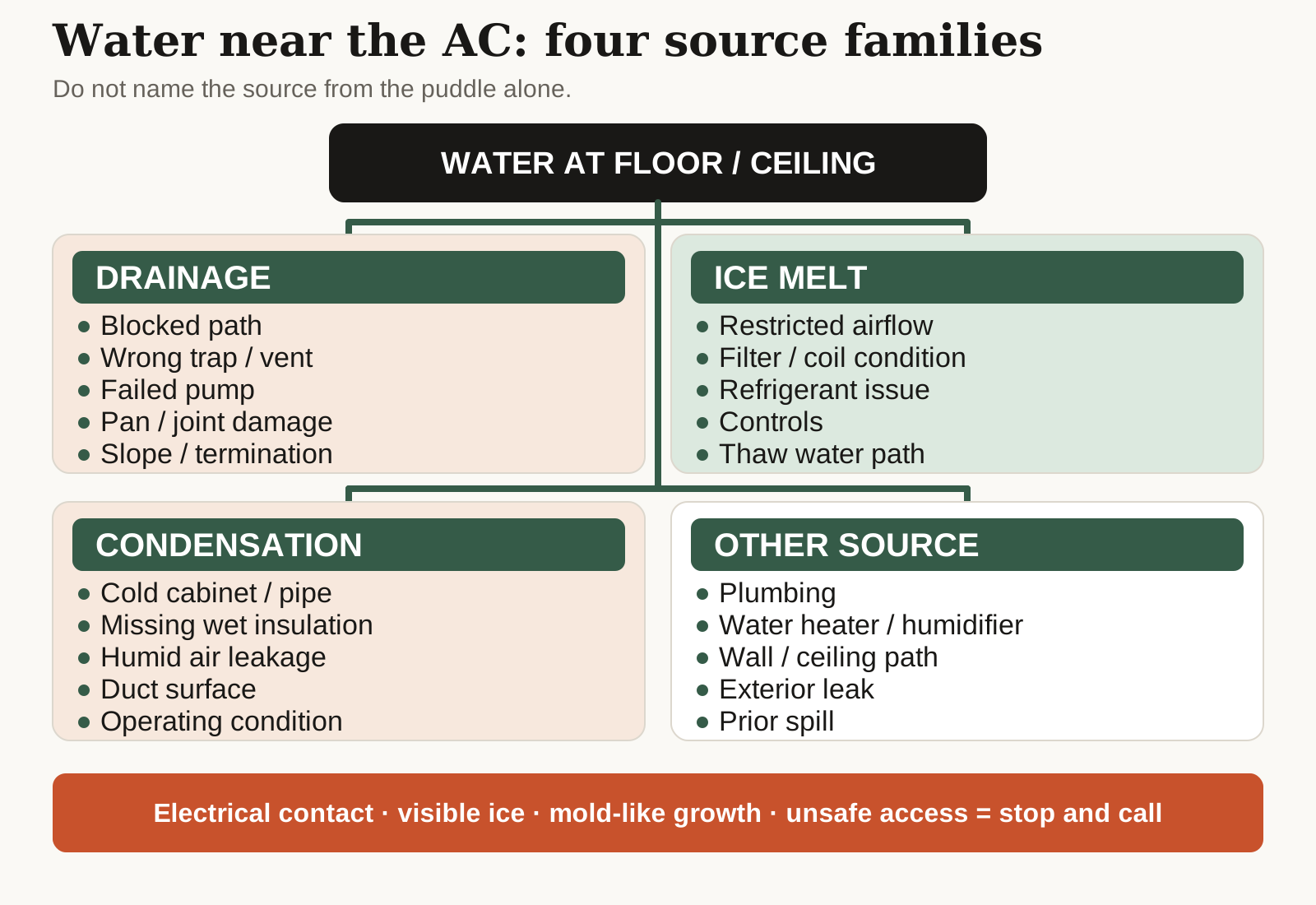
Water on the floor is not always a clogged line
Drainage path problems
A blockage can occur in the pan opening, trap, pipe, pump reservoir, or downstream path. But water can also escape from a cracked or corroded pan, loose joint, damaged pump, wrong slope, poor support, missing or incorrect trap, or a secondary path that was not routed as intended. Clearing one section will not repair a failed component.
Ice that later melts
A frozen evaporator coil can produce a puddle as it thaws. A current Trane consumer page lists visible ice, frozen refrigerant lines, warm supply air, and water near the handler as signs of freezing. It advises switching cooling off at the thermostat, not chipping the ice, and calling HVAC service. It lists restricted airflow, filter, return, coil, refrigerant, and thermostat possibilities. These are possibilities, not a homeowner refrigerant diagnosis.
Surface condensation
Warm humid air meeting a cold cabinet, pipe, boot, or duct surface can form water outside the intended pan. Damaged or missing insulation, air leakage, a cold bridge, and operating conditions may contribute. Surface condensation and an internal drain overflow can happen together, so the technician should inspect both rather than stopping at the first wet surface.
Another building source
A nearby water heater, humidifier, plumbing line, drain, appliance, wall cavity, or earlier spill can send water toward the air handler. Water may travel along framing, pipe, duct, or flooring before becoming visible. Do not assume the highest stain or nearest appliance is the origin.
Why this guide excludes popular drain-line hacks
Search results commonly recommend vinegar, bleach, peroxide, compressed air, nitrogen, a garden hose, hand snake, or wet/dry vacuum. Those directions assume the reader has identified the correct line, access, material, trap orientation, termination, pump, secondary path, equipment state, and product compatibility. A photo of PVC does not establish those facts.
- No chemicals: Do not pour bleach, vinegar, drain opener, biocide, pan tablet, or another product into an unidentified opening. Product approval, material compatibility, dosage, downstream disposal, occupant exposure, and existing products are unknown.
- No pressure: Do not blow by mouth or use compressed gas, a hose, or pressure tool. Pressure can separate joints, drive debris into equipment or occupied space, aerosolize material, or send water out an unseen opening.
- No blind cable: A plumbing snake or wire can damage a trap, pump, pan, fitting, or thin drain path and can become stuck. Condensate piping is not a general household drain-clearing exercise.
- No improvised vacuum: A wet/dry vacuum adds electrical equipment to a wet incident and can pull from the wrong termination or across a pump or trap. This guide does not provide that sequence.
- No switch bypass: A float or sensor may be preventing more water. Do not hold, remove, jumper, reset, or defeat it to restore cooling.
- No cabinet opening: Panels can expose electrical, blower, sharp-metal, refrigerant, contaminated, and moving-component hazards. The technician follows the exact equipment manual and safe service procedures.
EPA's duct guidance also notes unresolved questions around biocides and says pesticide products must be used only for labeled uses. A “sanitizing” claim is not permission to introduce a chemical into a condensate or air-distribution system.
What qualified HVAC service should document
A useful service record starts with the exact equipment and installation, not a universal condensate sketch. Ask the technician to identify the air handler or coil, operating position, approved drain arrangement, primary and secondary paths, auxiliary pan, trap, vent, pump, switch, termination, and service access. The installed configuration should be compared with its current manufacturer instructions and applicable requirements.
| Question | Useful evidence | Weak substitute |
|---|---|---|
| Where did water leave the intended path? | Observed pan level, opening, joint, pump, auxiliary pan, cabinet or thaw route | “The line was dirty” without location |
| Was there a blockage? | Segment identified, material retrieved, flow and leak test after service | Outdoor dripping alone |
| Was the coil frozen? | Observed ice and airflow, filter, coil, control and refrigerant findings | Puddle after cooling stopped |
| Did a safety operate? | Device type, location, test and control response | Assuming every system has a float switch |
| Is the pipe/cabinet condensing? | Surface, insulation, air leakage, humidity and operating-condition evidence | Calling all clear water “condensate overflow” |
| Is drainage verified? | Manufacturer-compatible test from pan through intended termination, with leaks checked | One poured cup disappearing |
The repair record should state what was cleaned, cleared, replaced, re-supported, insulated, sealed, or rerouted; which products were used; and what remained inaccessible. If a float or overflow sensor is recommended, confirm that it is compatible with the equipment and control logic. Trane's page is product-family guidance and expressly says not all handlers have an overflow switch.
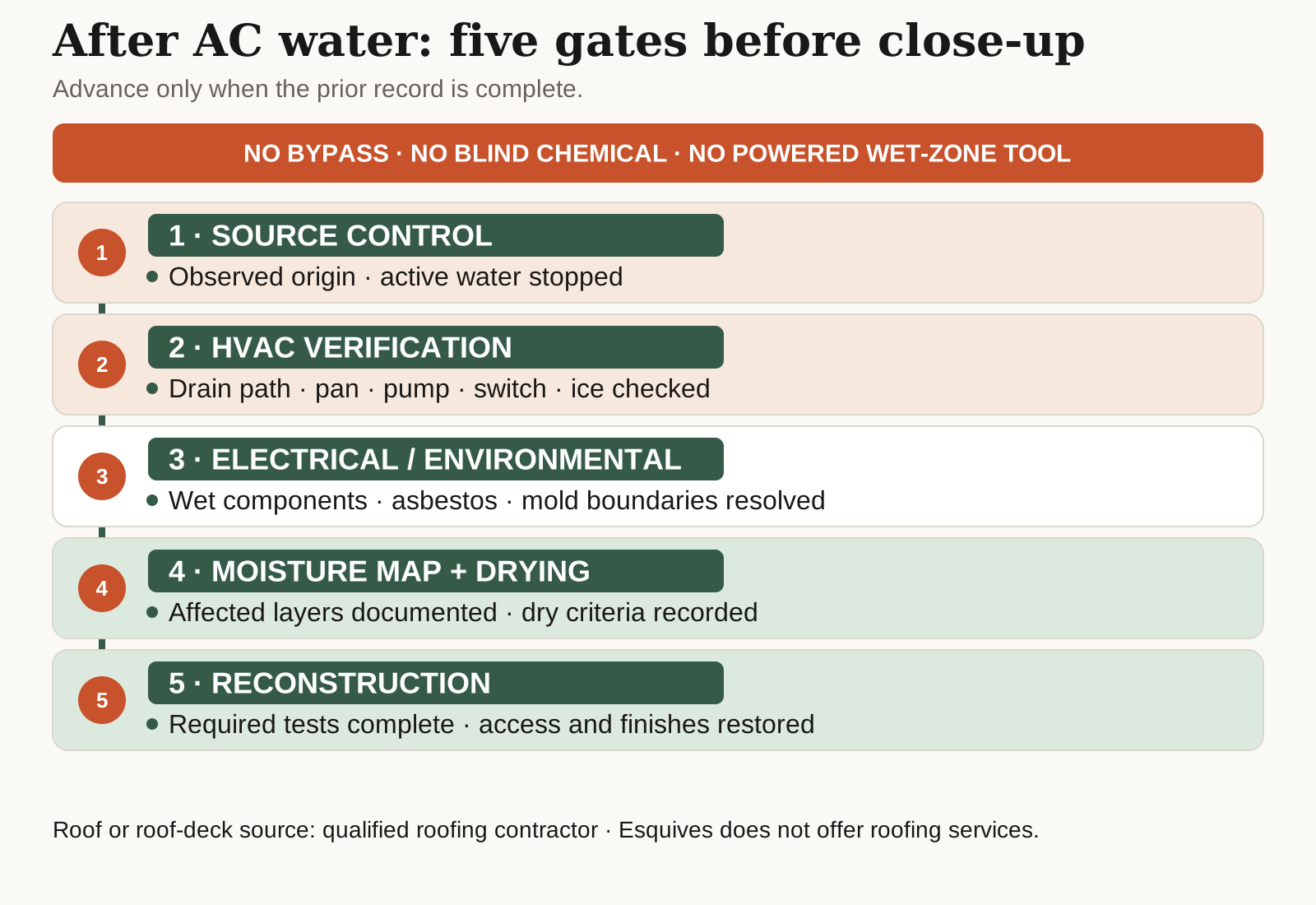
Dry the building, not just the visible puddle
After electrical safety and source control, map every material water reached. Check flooring and underlayment, carpet and pad, baseboards, drywall faces and cavities, insulation, cabinet toe kicks, framing, and the room below. Water can move beyond the visible edge by gravity and capillary action. A moisture meter needs the correct material setting and comparison area; one number is not a universal dry standard.
EPA advises acting quickly and says that when wet materials are dried within 24 to 48 hours, mold will not grow in most cases. “Most cases” is not a guarantee. Material, temperature, contamination, duration, hidden layers, and occupant sensitivity affect the response. Keep a drying log with locations, instrument, readings, ambient conditions, removal decisions, and photos.
If mold-like growth, a musty odor, or suspected HVAC contamination appears, stop ordinary system operation and use qualified assessment. EPA warns not to run an HVAC system known or suspected to be contaminated with mold because it could spread material. Do not paint, caulk, or cover damp or moldy surfaces.
Suspect asbestos can exist in old duct insulation, ceiling texture, flooring, mastics, and other materials. EPA says appearance usually cannot identify it and warns against homeowner sampling. Preserve suspect material and use trained, accredited asbestos professionals before destructive drying access or demolition.
When walls, ceilings, and floors can be restored
Do not close the assembly just because cooling runs again. Restoration starts after the HVAC source and safety devices are verified, electrical exposure is cleared, wet or contaminated material decisions are documented, the moisture boundary is dry under the project criteria, and required inspections or tests are complete.
Reconstruction scope should identify any documented fire-resistance, air-control, thermal, acoustic, structural, access, and finish requirements the opened assembly must retain or restore. Keep access to service points, drains, pans, pumps, switches, filters, and cleanouts required by the equipment and design. A finish patch must not hide a required service point or an untested joint.
If a ceiling or wall opening intersects an exterior source, any roof, roof-deck, flashing, penetration, or roof-leak repair stays with a qualified roofing contractor. Esquives does not offer roofing services. Interior closure waits for that source record and drying confirmation.
Prevention without a universal chemical schedule
- Keep the exact equipment manuals and a diagram of every condensate component and termination.
- Include condensate drain, pan, pump, switch, filter, coil, and operating-control checks in qualified seasonal maintenance.
- Keep the equipment area visible and free of storage that blocks inspection or absorbs a small leak before it is noticed.
- Record every cleaning product or treatment used by a technician, including label, location, amount, and compatibility basis.
- Ask whether an equipment-compatible overflow device or conspicuous secondary path is appropriate; do not assume one device fits every system.
- After remodeling, keep construction dust out of the HVAC system and verify the drain and pan before cooling resumes.
- Investigate recurring clogs, pan water, ice, or shutdowns as a cause question. Repeated clearing is not proof that the installed drainage path is correct.
This guide provides no universal bleach, vinegar, tablet, flush volume, vacuum time, air pressure, maintenance interval, cost, completion time, or “permanent fix.” The installed manual and qualified diagnosis control the service plan.
AC drain and water questions
Can I keep the fan running while cooling is off?
Do not choose a fan mode generically. If a coil is frozen, water is near electrical parts, or HVAC contamination is suspected, fan operation can change water or contaminant movement. Follow the qualified technician and exact equipment instructions.
Does no water at the outdoor drain prove a clog?
No. The system may not be producing condensate, the observed pipe may not be the primary termination, a pump or alternate connection may exist, or water may be escaping earlier. Trace the installed path.
Should I pour vinegar or bleach into the cleanout?
Not from this guide. The opening, pipe, pan, pump, materials, products already present, label, downstream disposal, and equipment instructions are unknown. Have qualified HVAC service identify and maintain the path.
Why did the AC shut off when the floor was wet?
An overflow switch may have operated, but not every air handler has one and other faults can stop cooling. Do not bypass or reset it. Preserve the condition and have the system tested.
Who repairs drywall after the drain is fixed?
A general contractor can scope interior access and restoration after qualified HVAC diagnosis, electrical clearance, material hazard review, moisture mapping, and drying. Roof-related sources go to a qualified roofing contractor; Esquives does not offer roofing services.
Sources and verification
Primary government and current manufacturer sources opened and checked August 8, 2026:
- ENERGY STAR: HVAC Maintenance Checklist
- U.S. EPA: Should You Have the Air Ducts in Your Home Cleaned?
- U.S. EPA: A Brief Guide to Mold, Moisture and Your Home
- Trane: HVAC Air Handler Overflow Switch
- Trane: Why Is My Air Handler Freezing Up?
- U.S. Consumer Product Safety Commission: Home Electrical Safety Checklist
- U.S. EPA: Protect Your Family from Exposures to Asbestos
Scope: General education, not an HVAC, refrigerant, electrical, mold, asbestos, moisture, roof, or permit diagnosis; not a cleaning recipe, drying protocol, bid, or guarantee. Do not work in standing water, open energized equipment, bypass a control, chip ice, introduce chemicals, pressure, cable, or a powered vacuum into an unknown condensate path. Roofing requires a qualified roofing contractor; Esquives does not offer roofing services.