Sources and City route checked August 9, 2026. Recheck the live City page when an event occurs because contact information and responsibility policies can change.
| Pattern | First zone to investigate | What the pattern does not prove |
|---|---|---|
| One fixture only | Local zone Stopper, trapway, fixture trap, or near-fixture branch | It does not prove any shared line is restricted |
| Sink, tub, and toilet in one bathroom | Bathroom group First common branch, vent interaction, and fixture conditions | It does not prove the building sewer or public main |
| Fixtures in several rooms or floors | Wider system Building drain, private lateral, pump or backwater device, septic or public connection | It does not locate the restriction or assign ownership |
| Water rises at a lower fixture when another drains | Stop use Shared downstream path needs professional diagnosis | It does not prove a collapsed pipe or City-main blockage |
| Street manhole, street flow, or public spill | Report now Live City response route and property-side isolation | It does not make indoor cleanup or private plumbing safe |
Start with the first pipe the slow fixtures share
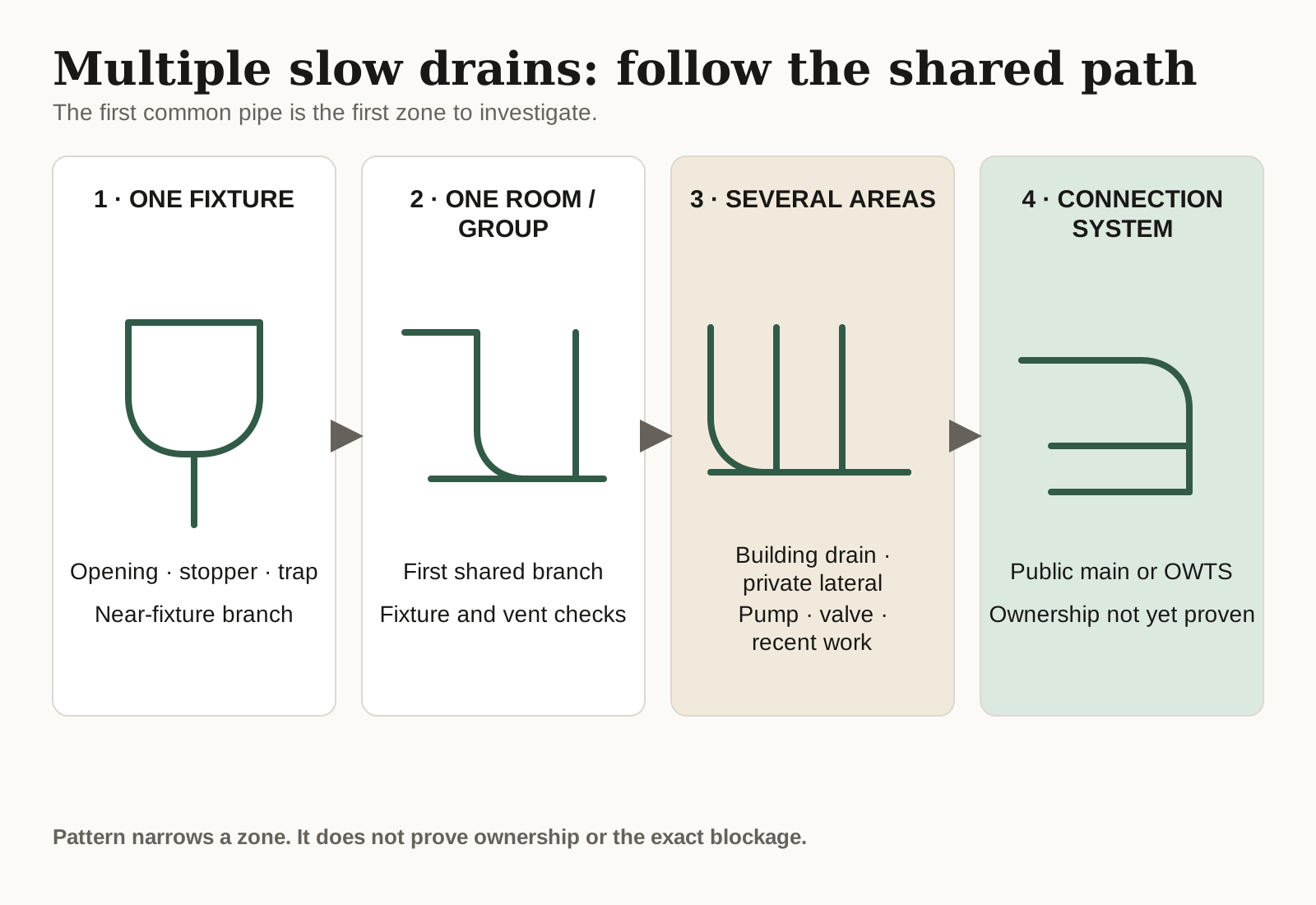
A drainage system joins fixtures in stages. A sink trap connects to a small branch. Bathroom fixtures may join a bathroom branch. Branches join a building drain, which reaches a private lateral, a public sewer main, or an onsite wastewater treatment system. If two fixtures share only part of that route, the first common segment is a useful starting zone.
That logic is conditional. Two sinks can slow for separate local reasons. A toilet may have a fixture problem while a shower has hair at its opening. A vent, pump, backwater valve, damaged fitting, recent construction, or onsite system can affect several fixtures without putting the cause in the public main. Map the building before naming the line.
Timing adds evidence. Symptoms that began together after years of normal service raise a different question from drains that became slow one at a time over months. A toilet that changes the water level in a nearby shower connects the events more strongly than two unrelated slow basins. Still, no sound, odor, bubble, or number of slow fixtures proves the exact point.
What to observe without provoking a backup
- Stop high-volume use. Pause laundry, dishwasher cycles, long showers, and repeated flushing while the pattern is uncertain. Do not fill and dump fixtures to create a stronger symptom.
- List every fixture. Mark normal, slow, gurgling, stopped, or backing up. Include lower showers, tubs, floor drains, laundry receptors, and commercial floor sinks.
- Record timing. Note what was used immediately before another fixture changed and whether the symptom appeared during rain, recent work, tenant turnover, or septic service.
- Identify the wastewater system. Confirm public sewer versus an onsite wastewater treatment system (OWTS) from property records rather than assuming from the neighborhood.
- Find records, not openings. Gather past plumber reports, full camera files, cleanout or approved-wye records, septic as-builts, repairs, permits, and utility notices. Do not open a cap that may be holding wastewater.
- Protect the response. Tell every responder about chemicals already used, active sewage, electrical exposure, shared occupancy, and fixtures that must remain off.
A simple event log can prevent the service call from becoming a guess. Record the fixture, time, water direction, color or contamination concern, other fixture in use, and when the condition cleared. Do not handle sewage to improve the description. Photos from a clean, safe distance and a floor-plan sketch are more useful than another test flush.
Draw the fixture map by room and elevation
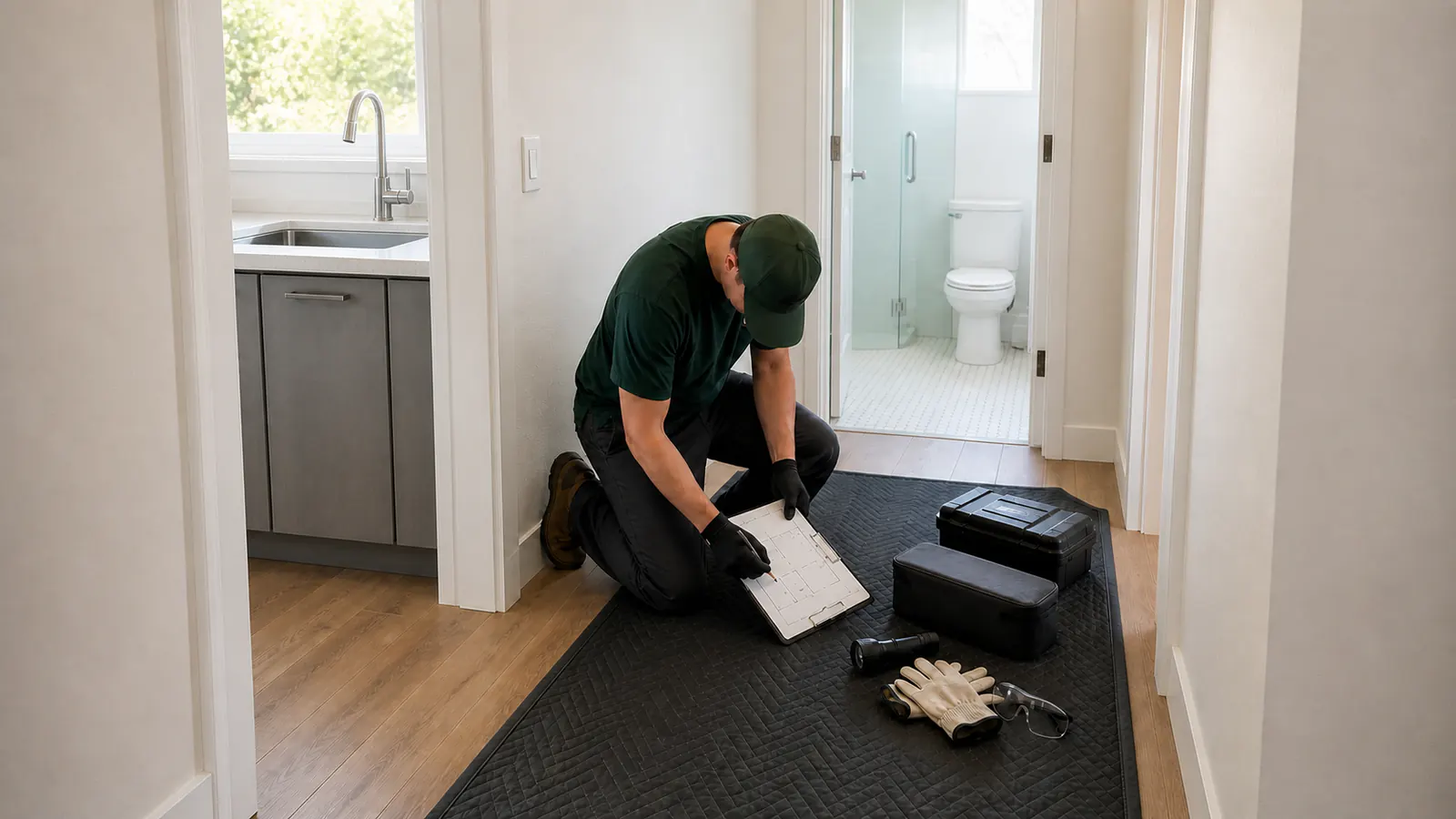
Begin with a box for each floor, then mark kitchens, bathrooms, laundry equipment, utility sinks, floor drains, and any basement or below-grade fixtures. Circle only what is actually slow or reacting. A cluster inside one bathroom supports a different starting access than a shower downstairs reacting to laundry upstairs. Mark gravity fixtures separately from any fixture served by a sewage ejector or other pump if records confirm one.
Record fixtures that remain normal too. An unaffected sink or bathroom can help the plumber separate one room branch from a wider building path. One observation does not clear a branch: a fixture may not have discharged enough water to reproduce the event. Keep the condition and test limits in the log instead of upgrading “did not react once” to proof.
Add known cleanouts and the route to the street or OWTS from plans or prior reports, but label uncertain locations as unknown. A yard cap is not automatically an approved property-line wye, and a pipe leaving the foundation is not proof of the municipal boundary. The purpose of the drawing is to help the plumber test a layout, not to create a homeowner diagnosis.
For a rental, multifamily, or commercial property
Notify the property manager and identify the affected units or tenant areas. Ask occupants to pause water use where a backup is possible. Record whether common-area drains, neighboring units, food-service fixtures, or upper and lower floors are involved without opening another tenant's plumbing. Shared systems require controlled communication so one person does not discharge water while another is inspecting an opening.
Why “multiple drains” is not main-line proof
A shared branch may serve only part of the building
A kitchen and laundry can join before they reach bathroom piping. Two bathrooms may share a stack or horizontal branch. In a commercial suite, several floor sinks can share tenant piping before the building drain. The affected group must be compared with the actual layout.
A septic or OWTS property has a different endpoint
Santa Clara County describes an OWTS as the system that processes wastewater where a property is not connected to a municipal sewer. Its current program oversees complaints for failing systems and permits repairs. Multiple slow drains on such a property can involve interior piping, the building sewer, the tank, treatment components, or dispersal conditions. A public-main diagnosis does not fit that system.
Vents, pumps, and valves can change the pattern
A vent interaction may contribute noise or poor drainage without becoming a remote diagnosis from a gurgle. A basement or low fixture may discharge through a pump rather than gravity. A backwater valve may need inspection, but San José warns that a valve is not appropriate for every property. Equipment records and direct inspection matter.
Several local restrictions can coexist
Hair, food, unsuitable flushed material, and maintenance conditions can affect different fixtures. The coincidence becomes less likely as cross-fixture reactions grow stronger, but it remains an alternative until the shared system is inspected. The honest conclusion is “shared restriction is more concerning,” not “the main line is confirmed.”
San José: public main, private lateral, and approved-wye courtesy
The live San José Sanitary Sewer page says the City maintains the sewer system in City streets and responds to blockages and spills 24/7. It directs immediate reports of sewer spills, bad odors, local flooding, and sewer overflows to 408-794-1900. That page was reviewed August 8, 2026; verify it again during a future incident.
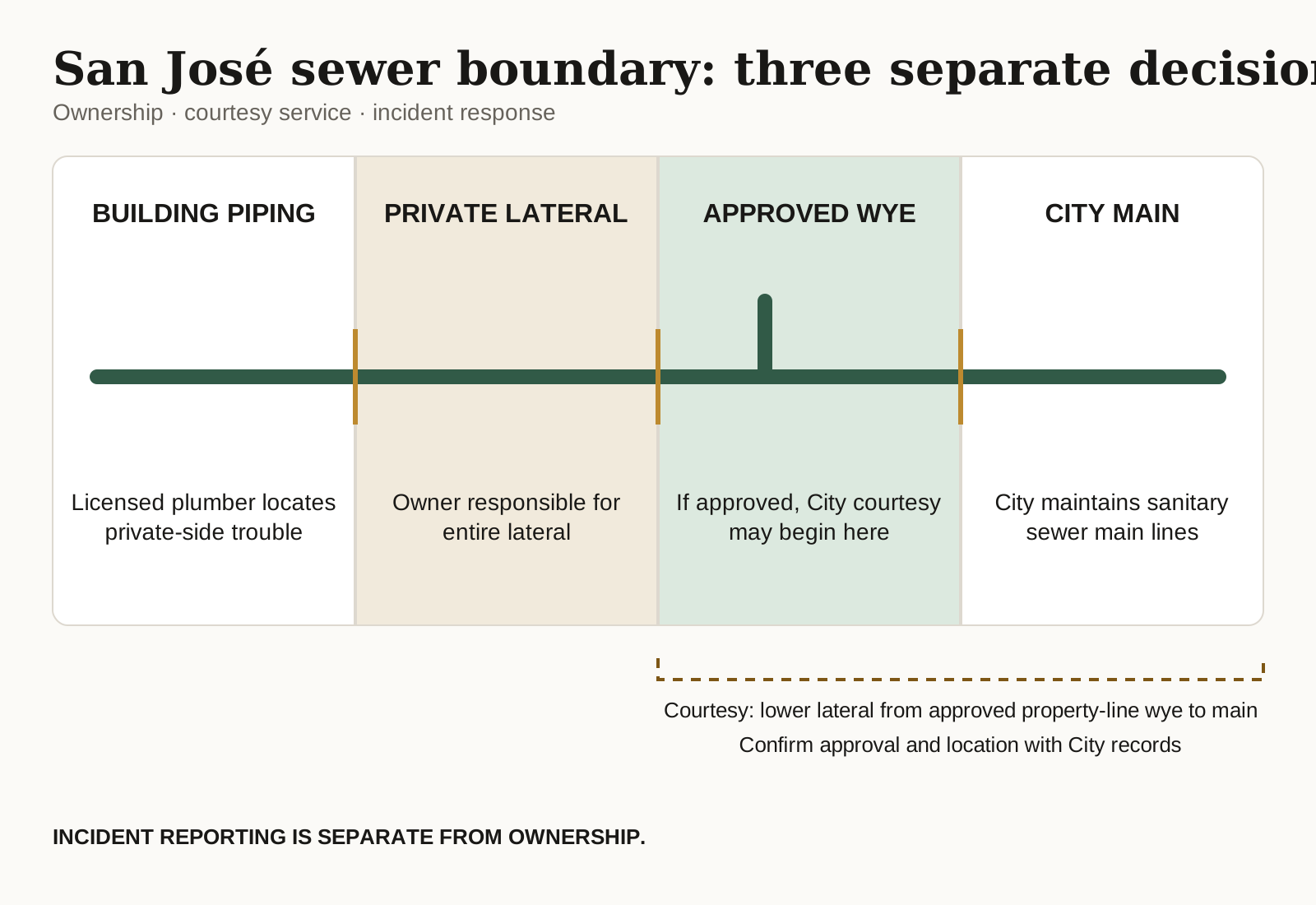
The City's current sanitary-sewer FAQ says the City maintains main lines, while the property owner is responsible for the entire lateral. It then describes a courtesy: if an approved property-line “wye” cleanout is installed within five feet of the property side of the sidewalk, the City will maintain the lower lateral from that approved wye to the main. That courtesy boundary does not transfer general ownership of the entire lateral.
If the property has no approved wye, the FAQ gives two routes: call a licensed plumber to respond to the sewer concern or install an approved wye, or contact the Department of Transportation for information and the installation fee. A homeowner should not infer the wye's approval, location, or responsibility from a cap in the yard. Use City records and professional confirmation.
Use two response tracks when sewage is escaping
Reporting the overflow and protecting private property happen at the same time. The City can investigate its system and jurisdiction, while the owner or manager limits indoor water use, controls access, and calls a licensed plumber for private-side evaluation. A City report is not a reason to keep using fixtures, and a private plumber call is not a reason to leave a street or public spill unreported.
Keep a call log with the reporting time, case or reference information if provided, responder names, findings, photographs taken safely, and the exact point each party says is or is not within its scope. Do not ask either party to declare responsibility before the location is established. If cleanup or building materials are affected, preserve the source-control and contamination records for the restoration scope.
What a defensible plumber report should include
Ask the plumber to name the access point, the fixtures served, the direction traveled, the length or landmarks used to estimate location, material retrieved, flow observed afterward, and limits of the work. If a cable or jet was used professionally, the report should distinguish opening a flow path from removing a cause. This article gives no powered-machine operating instructions.
A camera can help document accessible pipe after flow is restored, but water, debris, turns, branches, access, and operator interpretation limit what it shows. Keep the full video, not only a still frame. Ask which segment was visible, how location was estimated, and whether a repair recommendation is tied to a specific observed condition.
Do not authorize full replacement only because a line was slow, roots were suspected, or a clearing did not last. EPA and San José identify roots entering defects and unsuitable materials as possible contributors, but the repair must match the confirmed pipe, ownership boundary, access, and condition. A public-main event, private-lateral defect, building branch obstruction, and failing OWTS have different responders.
Clearing, repair, and reconstruction are different scopes
San José Bulletin #201 lists clearing stoppages and minor drain repairs as plumbing-permit exemptions. It says necessary replacement of a concealed trap, drainpipe, or vent pipe is new work requiring a plumbing permit. Work in a slab, exterior wall, shared building, commercial space, public right-of-way, or onsite wastewater system can add design, access, inspection, and restoration requirements.
A complete reconstruction scope starts after the plumbing location is defensible. It should identify selective demolition, hazardous-material questions, shoring or excavation controls, pipe work by the qualified trade, required tests and inspections, backfill or assembly restoration, moisture or sewage-affected finishes, and who documents closure. A temporary clear drain does not establish that all damaged materials or pipe defects have been addressed.
Prevention without a universal cause claim
EPA lists fats, oils, grease, some products marked flushable, and roots entering pipe defects among possible sewer-blockage contributors. San José advises keeping fats, oils, grease, and food scraps out of drains and says hot water will not melt away the hardened grease plug it describes. These are prevention facts, not proof of what blocked a particular property.
Keep fixture strainers and hair catchers compatible with their drains, put wipes and solid waste in the trash, retain sewer or OWTS records, and address recurring symptoms before wastewater escapes. Do not schedule chemicals or powered cabling as blind preventive maintenance. The correct maintenance plan depends on the documented system.
Multiple-drain questions
Do two slow drains mean the main sewer is clogged?
No. Two fixtures may share a branch, have separate local restrictions, or connect to a wider building drain, private lateral, public main, or septic system. Map the affected fixtures and cross-fixture reactions first.
Why does the shower rise when I flush the toilet?
The fixtures are interacting through a shared drainage path. Stop testing because the lower opening may become a backup point. A plumber should locate the restriction; the symptom does not prove the public main.
Should I call San José or a plumber first?
For a spill, bad odor, local flooding, or sewer overflow, the live Sanitary Sewer page reviewed August 8, 2026 says call 408-794-1900. For private-side symptoms, call a licensed plumber or property manager too. City investigation determines whether City jurisdiction is involved.
What if the property has septic?
Tell the plumber immediately and contact a qualified OWTS provider when the pattern reaches the onsite system. Santa Clara County investigates surfacing wastewater and oversees repair permitting; a municipal-main assumption does not apply.
Can I use drain cleaner in several slow drains?
This guide does not recommend it. It can leave hazardous product in multiple fixtures, expose later responders, and does not establish the shared restriction's location. Preserve information for anything already used.
Sources and verification
Primary and local-government sources opened and checked August 9, 2026:
- City of San José: Sanitary Sewer — live overflow route and City system
- City of San José: Frequently Asked Questions About Sanitary Sewer Services
- City of San José: Sewer Backup Prevention and Backwater Valves, updated April 14, 2026
- U.S. EPA: Sanitary Sewer Overflow Frequently Asked Questions, updated April 13, 2026
- County of Santa Clara Environmental Health: Onsite Wastewater Treatment Systems
- County of Santa Clara: Report OWTS Issues
- City of San José Bulletin #201: permit requirements and exemptions
Scope: General education, not a blockage-location, ownership, City-response, OWTS, cleanup, permit, or repair guarantee. Avoid sewage contact, drain chemicals, open cleanouts, and powered drain machines. Stop water use for rising wastewater and use licensed plumbing, City, OWTS, environmental, and construction professionals as the documented system requires.