
A weak shower feels like a pressure problem, but that description is only the start. The restriction may be in a showerhead, cartridge, fixture stop, branch, water heater, filter, softener, pressure regulator, service line, or the utility system. Static pressure can look acceptable while usable flow drops as soon as two fixtures run. A repipe addresses only part of that list.
Search results often jump from “old house” and “galvanized pipe” to whole-home replacement. Older pipe can be restricted, but age, material, and one symptom do not establish the failed boundary. The defensible decision is based on where performance changes, what the gauges and flow observations show, and what a qualified plumber finds. That process can support a small fixture repair, equipment service, regulator work, exterior water-service work, a partial branch correction, or an interior repipe.
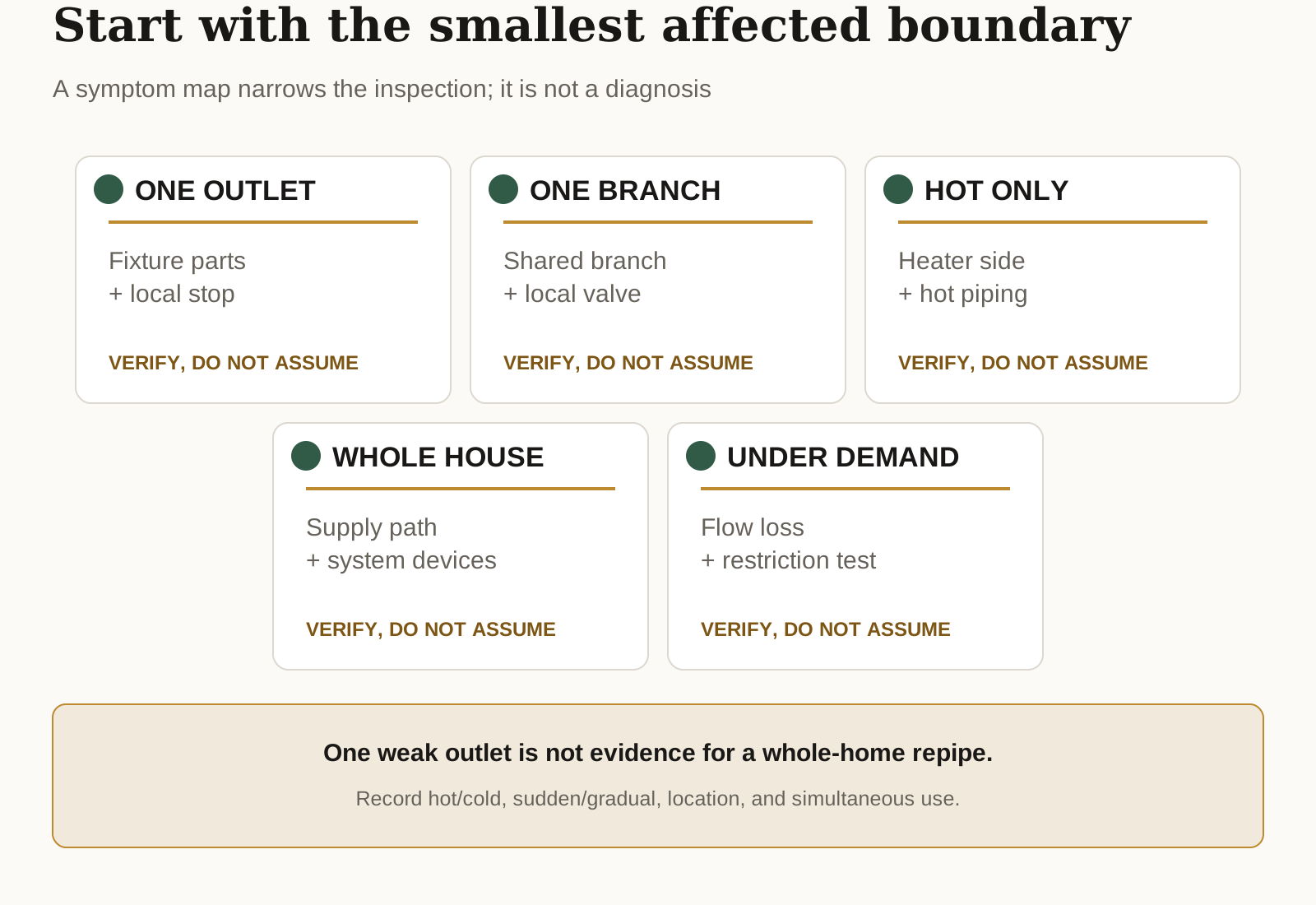
Map the symptom before touching a valve
Start with observation, not adjustment. Write down when the complaint began, whether it is constant or intermittent, and whether nearby street or plumbing work happened first. Test representative fixtures without disassembling plumbing: kitchen cold and hot, one bathroom sink, one shower, a tub if present, and an exterior outlet. Note whether toilets refill slowly and whether an appliance reports an inlet fault.
| Observed boundary | Areas to investigate | What it does not prove |
|---|---|---|
| One faucet or shower | Aerator or showerhead, cartridge, fixture stop, connector, or short branch. | That the main, regulator, service line, or whole interior system is bad. |
| One room or branch | Shared branch sizing, valve, local restriction, remodel connection, or pipe condition. | That every supply line should be replaced. |
| Hot side only | Water-heater inlet and outlet, mixing or recirculation equipment, hot branches, and model service needs. | That the cold service or utility pressure is low. |
| Whole house, sudden | Utility event, main or service leak, customer valve, regulator, filter, softener, or recent work. | That pipe corrosion developed overnight. |
| Whole house, gradual | Aerators, treatment equipment, regulator behavior, service line, distribution condition, demand changes. | That the house needs a full repipe without measurements. |
| Good alone, weak together | Available flow under demand, upstream restriction, equipment pressure drop, pipe sizing, and supply conditions. | That static pressure alone is adequate or that one material is responsible. |
Separate hot from cold at the same fixture. Compare fixtures close to the service entry with distant or upper-level fixtures. If the house has an accessory dwelling unit, irrigation connection, fire sprinkler, booster, softener, whole-house filter, leak shutoff, backflow device, or recirculation system, add it to the map. These components can change the test boundary and must not be bypassed or adjusted casually.
Pressure and flow answer different questions
Pressure is force; flow is the quantity delivered over time. Homeowners often use “pressure” for both. San Jose Water describes static pressure as a measurement taken while no water is being used. That is a useful baseline, but it does not reveal every restriction. A system can recover to a normal-looking static reading, then lose substantial pressure or flow while a shower and sink run.
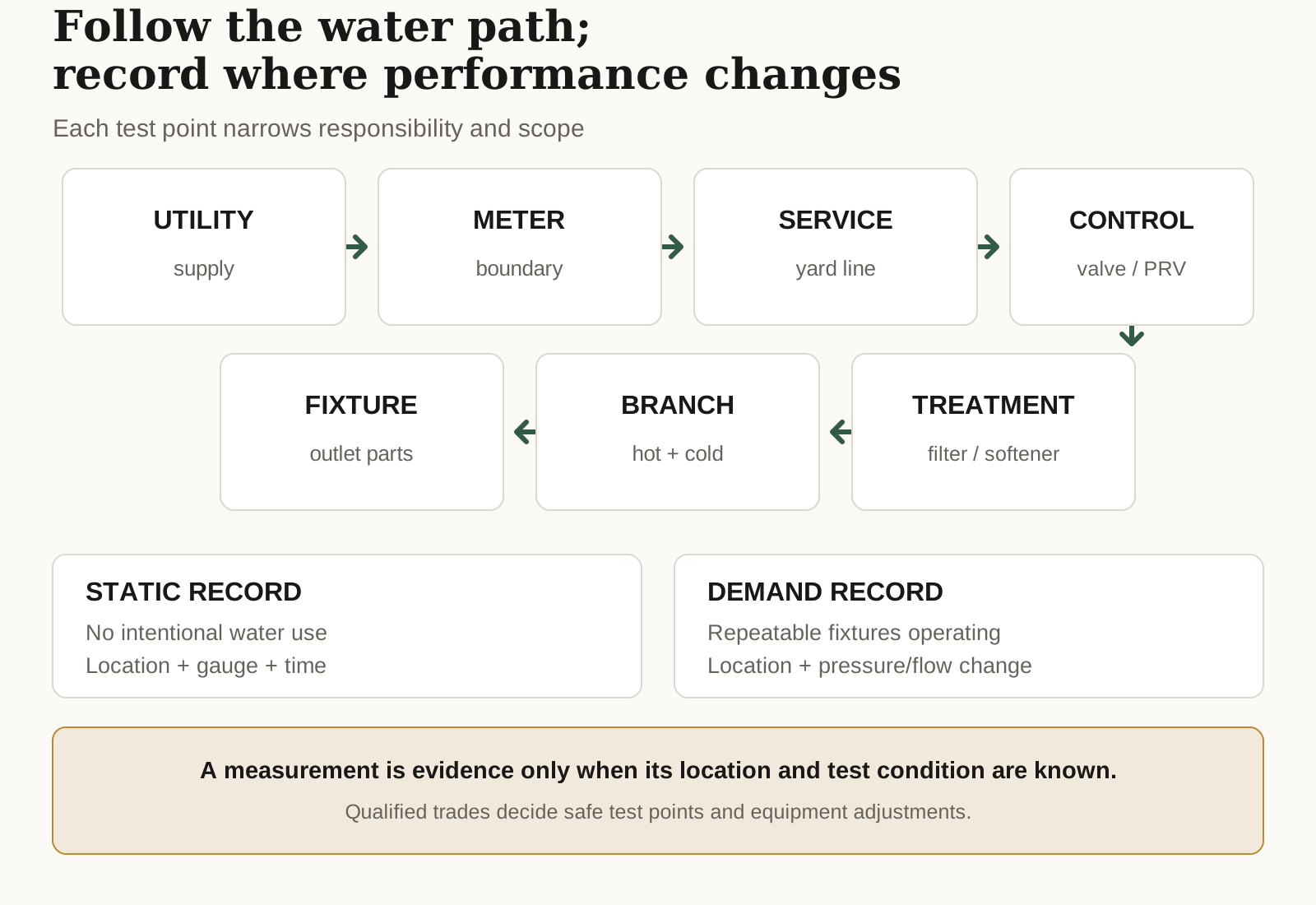
A qualified plumber can record pressure at chosen points with no flow and under repeatable demand. They can compare an exterior hose connection, locations before and after a regulator or treatment device when safe test points exist, and representative fixtures. The useful record identifies the gauge, location, time, test condition, fixtures operating, and result. A single unlabeled gauge photo is weak evidence.
Do not copy a pressure target from another city or a product blog. The City of San Jose's current plumbing page summarizes fixture pressure as 15 to 80 psi and says a regulator is required when supply pressure exceeds 80 psi. San Jose Water's customer page phrases the code requirement as applying to new buildings and says an existing property should consult a plumber. Because those public pages frame existing conditions differently, neither is a DIY set point or a property-specific ruling; verify the current adopted code and City interpretation for proposed work. EPA WaterSense says fixtures generally operate best when incoming pressure is 45 to 60 psi, but that is national maintenance guidance, not a San Jose diagnosis.
Pressure-regulator changes can affect fixtures, appliance valves, irrigation, fire protection, leak risk, and thermal expansion. San Jose Water recommends a licensed professional for household-regulator and fire-sprinkler adjustments. Leave the meter, utility valve, sealed devices, regulator, booster, backflow equipment, and fire-sprinkler controls to the responsible utility and qualified trades.
Check the utility and property boundary
San Jose does not have one water retailer for every address. The serving utility must be identified from the bill or address records before reporting pressure. A neighbor can be a useful clue, but a nearby house may have a different service elevation, regulator, pipe route, meter condition, or retailer.
San Jose Water states that it is responsible for pressure at its meter and that the customer is responsible for the system beyond the meter. Its low-pressure page lists a leaking main, a leaking customer service line between meter and house, a closed meter or house valve, a water-softener malfunction, and a customer-side regulator malfunction among possible sudden-drop causes. It lists a deteriorating galvanized service line, intermittent regulator trouble, and plugged aerators among possible gradual-decline causes.
Those are possibilities, not a remote diagnosis. Ask whether the utility has an outage, main repair, flushing operation, or service-pressure information for the address. Clarify who may operate the meter valve and who owns each segment. If utility pressure at the defined delivery point is confirmed, continue testing customer-side components in order. If it is not, a repipe proposal inside the house is premature.
Work through components in system order
A system-order review prevents a downstream symptom from being mistaken for a pipe failure. The exact order depends on the property, but the investigation usually follows water from the serving main and meter through the customer service, main shutoff, regulator or booster, treatment and protective devices, water heater for the hot side, main distribution, branches, fixture stops, connectors, cartridges, aerators, and outlets.
Fixture and branch restrictions
Mineral scale or debris at an aerator can reduce flow from one faucet. A showerhead, cartridge, fixture stop, flexible connector, or local valve can create a similar complaint. EPA WaterSense specifically notes that scale can build up in faucet aerators and restrict flow. Cleaning a manufacturer-approved removable aerator may be ordinary maintenance, but stop if parts are corroded, inaccessible, under warranty, or connected to a sensor or specialty fixture. Do not use aggressive chemicals or tools that damage finishes and seals.
If several fixtures on one branch are weak while others perform normally, the common branch deserves inspection. That can include a partially closed or damaged valve, debris after recent work, a restrictive remodel connection, pipe condition, or sizing that does not support the current simultaneous demand. The result may be a targeted correction rather than whole-house replacement.
Treatment, protection, and control equipment
Whole-house filters, softeners, leak-shutoff valves, backflow assemblies, and pressure regulators add pressure loss and maintenance requirements. A clogged filter or malfunctioning softener can affect the whole house. Follow the exact manufacturer's service and safe-bypass instructions; not every device may be bypassed, and bypassing can affect water quality or protection. A plumber can compare conditions before and after the equipment where proper test points exist.
A regulator can fail high, low, or intermittently. A brief surge when a faucet opens and then weak flow can be useful history, but it is not enough to order a regulator. Record static and demand behavior, check the model and installation, and evaluate thermal expansion and downstream protection as a system.
Hot-water-only complaints
If cold flow is acceptable at the same outlets but hot flow is weak, keep the initial investigation on the hot-water side. Possible boundaries include a water-heater shutoff, connector, inlet screen, mixing valve, heat exchanger, recirculation check valve, hot main, or local hot branch. The exact heater model and manual matter. Do not open, flush, energize, fire, bypass, or disassemble a water heater based on a general article; hot water, pressure, electricity, gas, venting, and combustion can cause severe injury.
When piping becomes the supported scope
Piping moves up the list when the affected boundary follows a distribution zone, measurements show a repeatable pressure or flow loss across that piping, accessible samples or inspection show meaningful internal restriction or deterioration, leaks recur in the same aging system, or installed sizes and layout cannot support documented demand. Each fact is stronger when it agrees with the others.
Pipe material helps plan investigation, access, joining methods, grounding implications, and hazardous-material precautions. It does not by itself prove present condition. Galvanized steel can corrode internally and restrict flow; San Jose Water identifies a deteriorating galvanized customer service line as one possible cause of slowly declining volume. Copper, plastic, mixed-material, and repaired systems have different potential failures. A label such as “old galvanized” still does not locate whether the restriction is the exterior service, a main, one branch, fittings, or the full interior network.
Ask the contractor to mark the proposed boundary on a simple plan. An interior repipe replaces water distribution within the building. San Jose separately defines a water-service project as exterior piping from the house to the water meter. A branch correction changes only a supported zone. These scopes affect access, restoration, permits, inspections, shutdown planning, and price differently. They should never be collapsed into the word “repipe.”
A sound repipe proposal records pipe routes and sizes, fixture count and simultaneous demand, water-heater connections, hose and irrigation connections, shutoffs, regulator and expansion control, fire-sprinkler interface, grounding and bonding review, wall and ceiling openings, cabinets and tile, fire or shear assemblies, testing, insulation, inspections, finish restoration, containment, and owner handoff. It also states which concealed conditions remain unknown.
San Jose permits and wall openings
The City of San Jose's Repipe & Water Service Projects page was updated April 14, 2026. It says a plumbing permit is required for a repipe or water-service project. A building permit is also required if the work affects a shear wall, firewall, or structural member, and plans must be submitted for that building permit. The page distinguishes interior repiping from exterior water-service work.
For a single-family home or duplex, San Jose currently directs a plumbing-only scope to SJPermits.org. If structural repair adds a building permit, it directs the project to Standard Plan Review. Property type and scope change the path. The current page, project address, and proposed openings should be confirmed before filing; this guide does not promise permit eligibility, review time, inspection result, or a specific route.
Wall access can reveal more work than supply pipe. Cutting or patching a rated wall, shear element, waterproofed area, tile assembly, cabinet, or potentially hazardous finish needs its own plan. Homes may contain asbestos, lead-based paint, mold, pests, or damaged framing. Testing and qualified abatement or repair belong before disturbance when conditions warrant. Do not let a plumbing diagnosis quietly become uncontrolled demolition.
Ask for a decision record, not a sales conclusion
- Define the complaint. List affected outlets, hot versus cold, floor and zone, sudden versus gradual onset, intermittent behavior, and performance with one or several fixtures running.
- Confirm the supply boundary. Identify the retailer, ask about utility conditions, document responsibility at the meter, and distinguish the customer service from the interior distribution.
- Record safe measurements. Use named test locations and repeatable no-flow and demand conditions. Keep regulator or equipment adjustments with qualified trades.
- Isolate components. Evaluate fixture parts, local stops, branches, the hot-water side, treatment equipment, controls, valves, leak evidence, and pipe condition in system order.
- Compare supported scopes. Request fixture/equipment repair, service-line, branch, partial, or full-interior options only where evidence supports them, with common restoration and exclusions.
No universal cost, schedule, expected pressure increase, water savings, or service life is defensible from the symptom alone. Access, pipe route, fixtures, system condition, test results, finish restoration, property type, permits, and concealed conditions control the project. A proposal should state the starting measurements and what success will be tested after work.
Frequently asked questions
Does weak pressure everywhere mean I need a whole-house repipe?
No. It points the investigation upstream of individual fixtures, but that path still includes the utility, service line, valves, regulator, filter, softener, leak-control equipment, and main distribution. Measurements are needed to locate the loss.
Can a clogged aerator affect the whole house?
One clogged aerator normally affects that outlet. Debris after service work can reach several aerators, while a clogged whole-house filter can affect many outlets. The symptom map distinguishes those boundaries.
Is static pressure enough to approve or reject a repipe?
No. Static pressure is one baseline measured with no water use. Performance under controlled demand, flow observations, test location, component pressure loss, pipe condition, and system layout add the evidence needed for a scope decision.
Should I adjust the pressure regulator myself?
No general article can establish a safe setting or adjustment. San Jose Water recommends a licensed professional for household-regulator and fire-sprinkler adjustments. The professional should consider code limits, equipment, thermal expansion, irrigation, fire protection, and leak risk.
Can old galvanized pipe cause low flow?
Yes, internal deterioration can restrict a galvanized service or distribution line. But material and age do not prove the location or extent. Confirm whether the supported scope is the exterior service, a branch, or the interior system.
What should a pressure-improvement proposal promise?
It should avoid a universal number. Ask for documented baseline tests, the diagnosed boundary, proposed work, assumptions, exclusions, access and restoration, permit path, and a repeatable post-work verification plan.
Sources and verification
- San Jose Water, Water Pressure (utility/customer boundary, pressure testing, and possible low-pressure causes).
- City of San Jose, Plumbing Projects (updated April 9, 2026; local pressure and shutoff summary).
- City of San Jose, Repipe & Water Service Projects (updated April 14, 2026).
- U.S. EPA WaterSense, Home Maintenance (leaks, pressure maintenance, and aerator scale).
- U.S. EPA WaterSense, Leak Detection and Flow Monitoring Devices (updated February 27, 2026).
The adversarial pass rejected repipe-first conclusions, a single-pressure-number diagnosis, material-by-age conclusions, homeowner regulator adjustment, meter-valve instructions, universal improvement claims, and generic cost or schedule ranges. See the verification ledger.
This guide is general planning information, not a remote diagnosis, plumbing design, utility determination, code interpretation, permit decision, or instruction to operate valves or equipment. Do not enter wet electrical areas, disturb gas or water-heater systems, tamper with a meter, adjust fire protection, or open walls based on this article. The serving utility, qualified licensed trades, manufacturer instructions, and authority having jurisdiction control the work.