Start with the scale, not a diagnosis
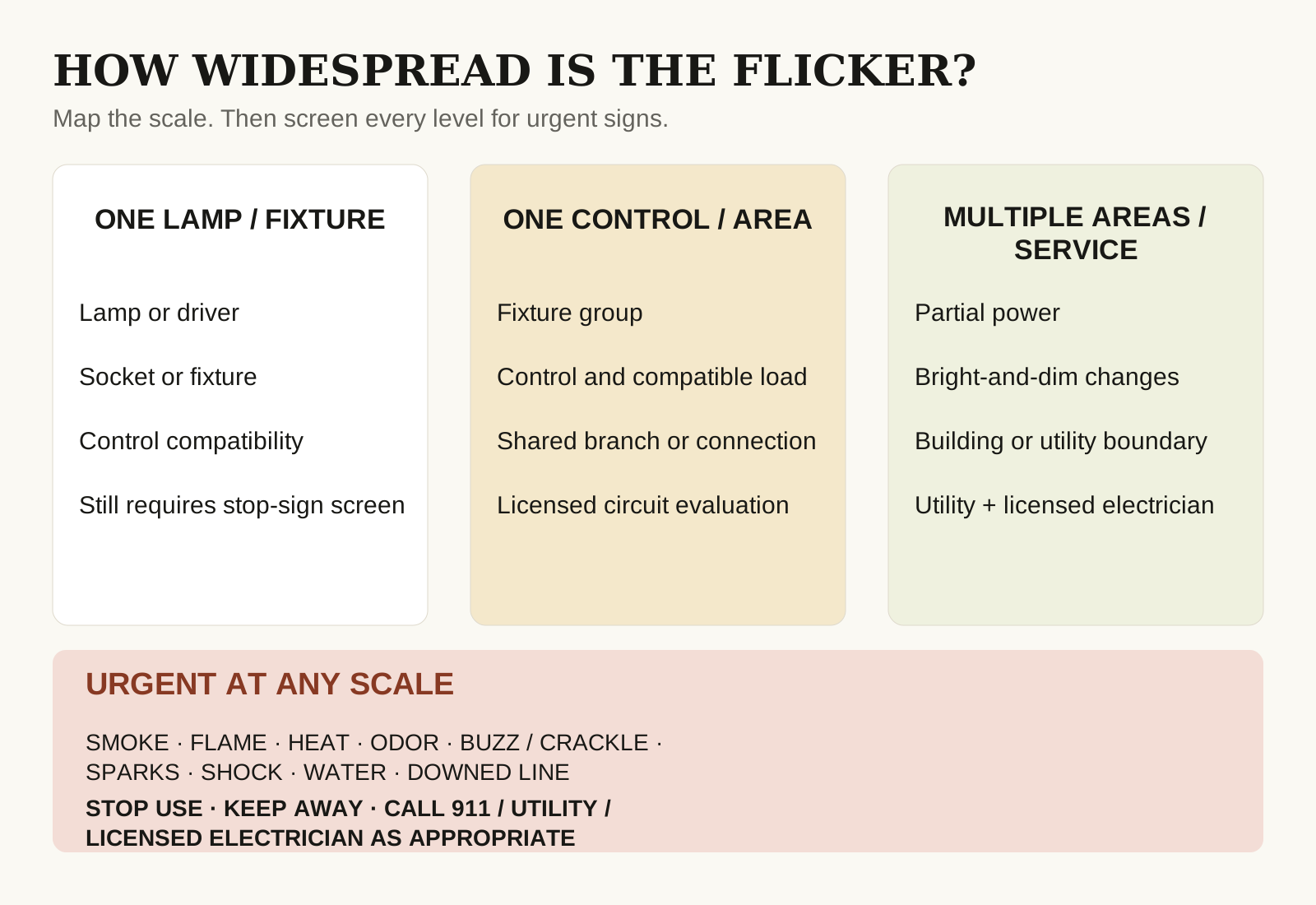
“Flickering” can mean a brief blink, repeated shimmer, strobe, brightness sag, brightening, or full loss and return. Those are different observations. Note whether the change affects one lamp, every lamp on one control, several lights and receptacles in an area, multiple rooms, an entire unit, or neighboring properties. Do not create the event again to classify it.
A single replaceable lamp can involve a lamp electronics issue, a loose or damaged lamp connection, socket/fixture condition, or control compatibility. LED and dimmer behavior is product-specific; Lutron’s currently posted support material says some LED flicker at parts of a dimming range can involve lamp/dimmer compatibility. That is a limited manufacturer example, not permission to open a switch, adjust hidden settings, or assume every one-lamp flicker is harmless.
Several affected lights on one switch can involve the control, compatible load, fixture group, or shared wiring. Several lights and receptacles across one area may involve a branch circuit or upstream connection. Changes across multiple unrelated rooms, partial power, or some lights growing brighter while others dim can involve a larger distribution, neutral, service, generation, or utility-side issue. Those patterns raise urgency, but they do not identify which conductor or owner boundary is responsible.
Urgent patterns that should not wait for a DIY test
- Fire indicators: smoke, flame, flashes, showers of sparks, active arcing, burning-plastic or hot-insulation odor, or visible melting/discoloration.
- Heat or sound: a hot fixture, switch, receptacle, cord, plug, panel exterior, meter area, wall, or ceiling; buzzing, sizzling, crackling, or popping from electrical equipment or a building assembly.
- Shock or water: any tingle/shock, wet fixture or switch, leak near electrical equipment, flooding, storm intrusion, or moisture at exterior lighting.
- Whole-service behavior: sudden partial power, several unrelated areas changing together, bright-and-dim swings, or lights changing while major equipment starts across the property.
- Exterior utility danger: a downed/sparking line, damaged pole, branch contacting a line, vehicle impact, or an object/ground/fence that may be energized. Stay away; do not investigate.
- Critical systems: flicker or unstable power affecting medical, fire/life-safety, elevator, access control, refrigeration, pump, server, laboratory, or other essential equipment.
CPSC identifies dimming/flickering lights, buzzing/sizzling, overheated-plastic odor, sparks, hot plates/covers, and frequent breaker resets as warning signs for licensed review. Its older home-wiring guide also says not to remove the service-panel cover and tells consumers to contact the power company when wind-related whole-home flicker appears at service equipment. The exact cause still must be verified.
Safe observations that help—without electrical testing
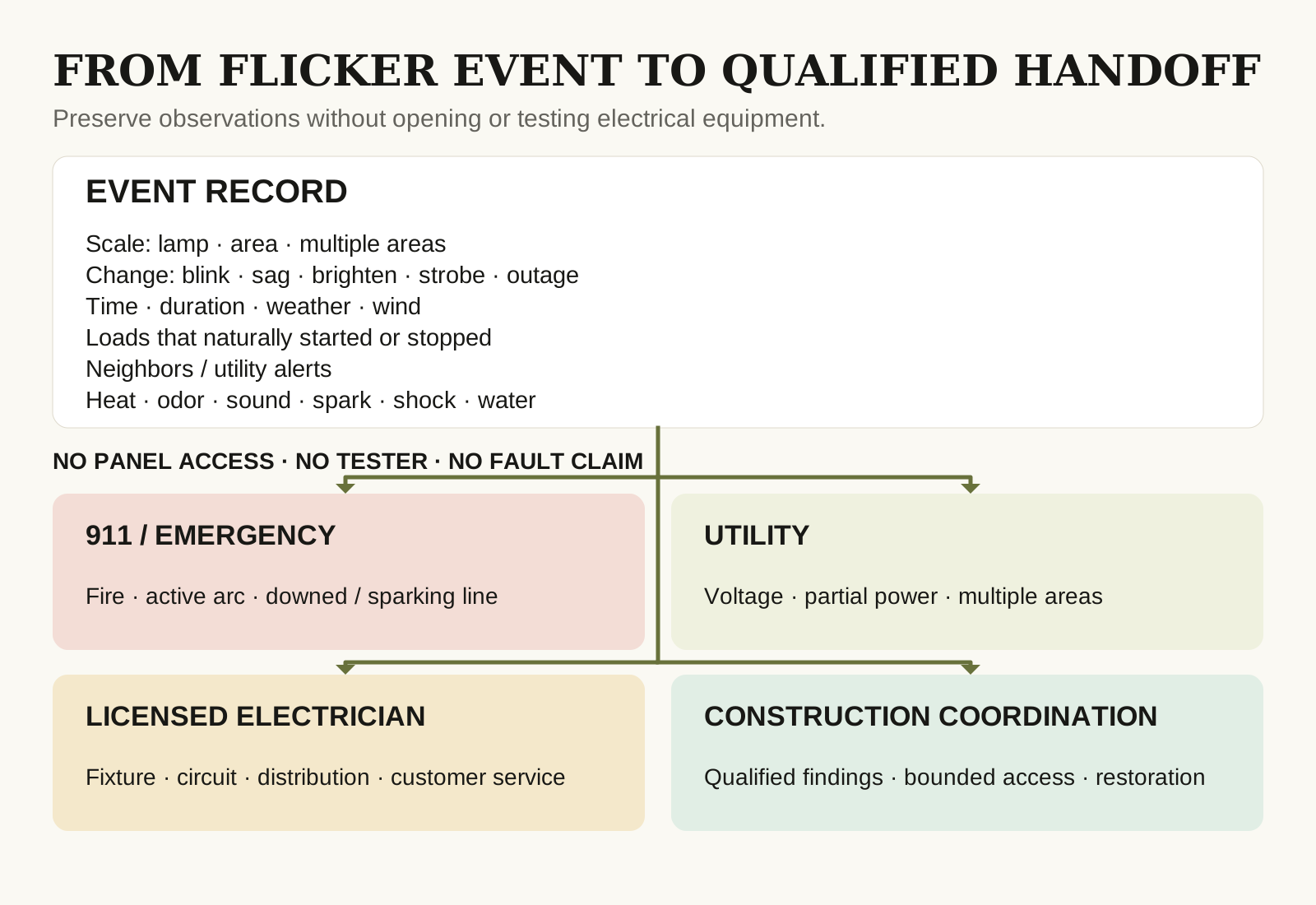
- Stop for warning signs first. Do not continue mapping around heat, odor, sound, sparks, shock, water, smoke, flame, damaged service equipment, or a downed line.
- Mark affected lights from memory. Draw a room/unit plan and identify which fixtures changed, whether receptacle loads or hardwired equipment also changed, and whether the event was a blink, sag, brightening, strobe, or full outage.
- Record the natural timing. Note time, duration, weather, wind, utility outage alert, and equipment that happened to start or stop. Do not cycle an appliance, dimmer, switch, or breaker to make the flicker return.
- Ask about wider impact safely. Check the utility’s official outage/voltage channel and ask neighbors or building management whether they observed a similar event. Do not enter electrical rooms or inspect poles, meters, roofs, or service conductors.
- Preserve product records. From packaging, receipts, or manuals—not disassembly—record lamp, fixture, dimmer/control, appliance, solar/inverter, battery, generator, EV, HVAC, or other equipment models that may be relevant.
- Protect critical equipment. Use the manufacturer, facility, medical, or business continuity plan. Do not improvise extension cords, power strips, panel switching, generator connections, or circuit transfers.
A video may help if it can be captured from a normal safe location without moving toward the equipment, touching controls, or waiting beside a suspected hazard. Include another steady reference light only if already in view; camera exposure and frame rate can create apparent flicker that eyes did not see. A recording documents what the camera captured, not voltage or fault location.
What common patterns can suggest—not prove
| Observed pattern | Questions it raises | What it does not prove |
|---|---|---|
| One replaceable lamp only | Lamp condition/type; fixture/socket/control; compatibility; heat or damage | That changing the bulb solves a wiring issue |
| All lights on one dimmer | Dimmable lamp/control compatibility, setting, load, control/fixture/wiring condition | That a trim setting or new dimmer is the answer |
| One room, including multiple controls | Shared circuit, upstream connection, switching, equipment interaction | The location of a loose connection |
| Several unrelated rooms | Distribution/service/utility boundary, shared neutral, generation, large load | That a loose neutral is confirmed |
| Some lights brighten while others dim | Potentially serious supply/neutral/distribution condition | Which side of the meter or building owns it |
| Event follows wind or storm | Utility/service equipment, tree/line contact, water, or ordinary outage event | That it is safe to inspect outside |
| Neighbors see it too | Utility or shared-building issue becomes more plausible | That customer-side equipment is cleared |
Do not use a plug-in meter, multimeter, non-contact tester, oscilloscope, smart-plug log, or panel monitor as a substitute for qualified investigation. Utility and electrician instruments have setup, accuracy, reference, access, and interpretation requirements. PG&E says it may install a recording voltmeter when an initial voltage investigation does not find the issue. That is a utility process, not a homeowner test instruction.
Who to call first
911 first for an active fire, smoke/flame, active arcing, downed or sparking power line, or immediate life safety threat. Stay away and follow dispatcher instructions. Do not approach a person, vehicle, tree, fence, water, or structure that may be energized.
The utility belongs in the call path for partial power, high/low-voltage concerns, flicker across multiple areas, outside service damage, neighbor-wide symptoms, or an uncertain utility/customer boundary. PG&E’s current “Report a voltage problem” page lists high/low voltage, partial power, and flickering lights and directs customers to 1-877-660-6789. This number and page were checked August 8, 2026; verify the live page at the time of an event.
An outage notice and a voltage complaint answer different questions. If service is fully out, use the utility’s current outage channel; if power is present but unstable, partial, high/low, or flickering, describe that symptom through the current voltage route. Record the case number and wording actually given. A neighborhood outage alert can provide context, but it does not prove every flicker inside a building has the same cause or clear damaged equipment. Conversely, no outage alert does not automatically move ownership to the customer. Let the utility and electrician document their own findings.
A licensed electrician evaluates fixtures, controls, branch circuits, panels, customer-side distribution/service equipment, connections, protective devices, grounding/bonding, and the interaction with appliances, solar, battery, generator, EV, HVAC, or other loads. Utility compliance does not prove the customer system is safe; likewise, a customer-side finding does not excuse visible utility danger.
Equipment service may be needed for a specific fixture, lighting control, appliance, inverter, HVAC system, elevator, or other complex load. The electrician and equipment provider should coordinate rather than each assuming the other owns the problem.
What the utility and electrician should document
A useful utility record identifies the complaint, service address, event dates, whether solar or other customer generation was reported, initial observations, any monitoring period, results, and whether the utility found service inside or outside its applicable voltage requirements. PG&E describes an initial Troubleman investigation and says it may install a recording voltmeter for a few days when the problem is not found immediately. Do not translate “within utility guidelines” into “the building is safe.” It means the utility reports its finding under its process; customer-side equipment and intermittent conditions may still need electrical review.
A useful electrician record identifies the exact fixtures and controls, affected branch circuits, customer distribution/service equipment, protective devices, grounding/bonding and neutral paths, relevant connections, equipment cycles, and interactions with solar, battery, generator, EV charging, HVAC, pumps, motors, elevators, or other loads. The electrician should state what was observed, measured, inaccessible, repaired, and verified—without presenting one video or a momentary normal reading as proof that an intermittent condition never existed.
Where the boundary is uncertain, utility and customer-side work can proceed in parallel with clear ownership and communication. Keep case numbers, service reports, monitor dates, electrician reports, safe videos, equipment manuals, and the event map together. If conditions worsen while an appointment is pending, use the new conditions to re-triage; a prior non-emergency appointment does not override smoke, fire, shock, downed-line, or active-arcing response.
Rentals, condos, and commercial spaces
Tell property management exactly whether the symptom is within one unit, common areas, several units, exterior lighting, elevators, fire/life-safety systems, or tenant equipment. Do not enter a locked electrical room, meter bank, roof, service yard, or another tenant’s space. Shared-building flicker may cross unit panels, house loads, common distribution, utility service, and tenant-owned equipment; location alone does not assign responsibility.
Businesses should follow approved continuity and shutdown plans for point-of-sale systems, servers, refrigeration, laboratories, medical equipment, access control, lifts, production machinery, and emergency systems. A temporary power decision can create transfer, grounding, load, fire, egress, ventilation, fuel, and utility-backfeed hazards. Portable generators, battery systems, and extension cords are not generic fixes for unstable power. Have the responsible facilities, electrical, equipment, and utility teams define the temporary and final plan.
What not to infer from the pattern
- “The bulb is loose.” One-lamp flicker leaves lamp, driver, socket, fixture, control, connection, and supply questions open. Do not handle a hot, wet, damaged, enclosed, or elevated fixture.
- “The neighbor saw it, so it is only PG&E.” Neighbor-wide symptoms make a utility event more plausible but do not clear customer wiring, shared building distribution, or damaged equipment.
- “The utility found normal voltage, so the electrician is unnecessary.” A limited investigation or monitoring interval answers the conditions captured. Fixture, circuit, panel, service, equipment, and intermittent customer-side questions may remain.
- “Lights brightened, so the neutral is definitely loose.” Bright-and-dim changes are an urgent pattern and neutral/distribution conditions belong in the fault tree. They do not identify the conductor, location, ownership, or repair.
- “The camera proves the voltage dipped.” Exposure, rolling shutter, frame rate, LED drivers, and display playback can alter appearance. Video preserves a visual event only.
- “A smart device reported voltage, so the cause is known.” Consumer-device sampling, calibration, placement, and interpretation have limits. Preserve its existing record but do not install, move, or use it near a suspected hazard.
Electrical and construction boundaries
Do not remove lamps from hot or damaged fixtures, open a fixture canopy, remove switch/receptacle plates, tighten a neutral, open a panel, operate/reset/replace breakers, test voltage, attach a logger, or rewire from this guide. Do not access a roof, attic, crawlspace, utility room, meter enclosure, service mast, weatherhead, or overhead conductor to trace flicker.
Once qualified electrical findings call for selective access, Esquives can plan protection and restoration through drywall, plaster, cabinets, floors, or ceilings. Before disturbance, coordinate structural, fire-resistance, air, sound, moisture, lead, asbestos, mold, and occupied-space requirements. The electrician controls when the electrical area is safe and what must remain open for inspection.
If the event follows a leak, correct the verified source and electrical impact before closure. Any roof, roof-deck, flashing, penetration, service-mast roof interface, or roof-leak evaluation and repair belongs to a qualified roofing contractor. Esquives does not offer roofing services.
Flickering-light questions
Is one flickering LED bulb urgent?
It may be limited to the lamp, driver, socket, fixture, or control compatibility, but first screen for heat, odor, sound, sparks, damage, shock, and water. Stop if any appears. Persistent flicker still deserves the correct product or electrical review.
Do whole-house flickers prove a loose neutral?
No. Multiple-area flicker or bright-and-dim changes can raise concern about distribution, neutral, service, utility, or generation conditions, but only qualified testing can identify the cause and ownership boundary.
Should I change bulbs to isolate the problem?
Do not handle a hot, damaged, wet, high, enclosed, or hard-to-reach fixture. Packaging and manufacturer compatibility records can help. A one-lamp change never clears wider circuit or service symptoms.
Can PG&E investigate flickering lights?
Yes. Its current voltage-problem page expressly lists flickering lights and partial power. Utility findings address its service-voltage process; customer-side electrical review may still be required.
Can Esquives repair the electrical fault?
Licensed electrical diagnosis and repair belong to an electrician. Esquives can coordinate bounded construction access and finish restoration after that scope is documented.
Sources and verification
Primary utility, federal safety, California trade-scope, and manufacturer sources opened and checked August 8, 2026:
- PG&E: Report a Voltage Problem
- PG&E Safety Action Center: Never Touch a Downed Power Line
- U.S. CPSC: Electrical System Hazard Warning Signs
- U.S. CPSC: Guide to Home Wiring Hazards
- Lutron: Flickering or Flashing LED Lights
- California CSLB: C-10 Electrical Study Guide
The CPSC wiring guide and warning poster are older. They support conservative warning signs and qualified-service boundaries, not modern code, a fault diagnosis, or their outdated load/reset calculations. The PG&E contact routes are dynamic and must be rechecked when used.
Scope: General education, not an electrical, utility, lighting-product, equipment, fire, moisture, structural, environmental, roof, code, permit, or project diagnosis. Do not open panels/fixtures/devices, operate breakers, test voltage, touch conductors, or rewire. Electrical work requires a qualified licensed electrician. Roofing requires a qualified roofing contractor; Esquives does not offer roofing services.