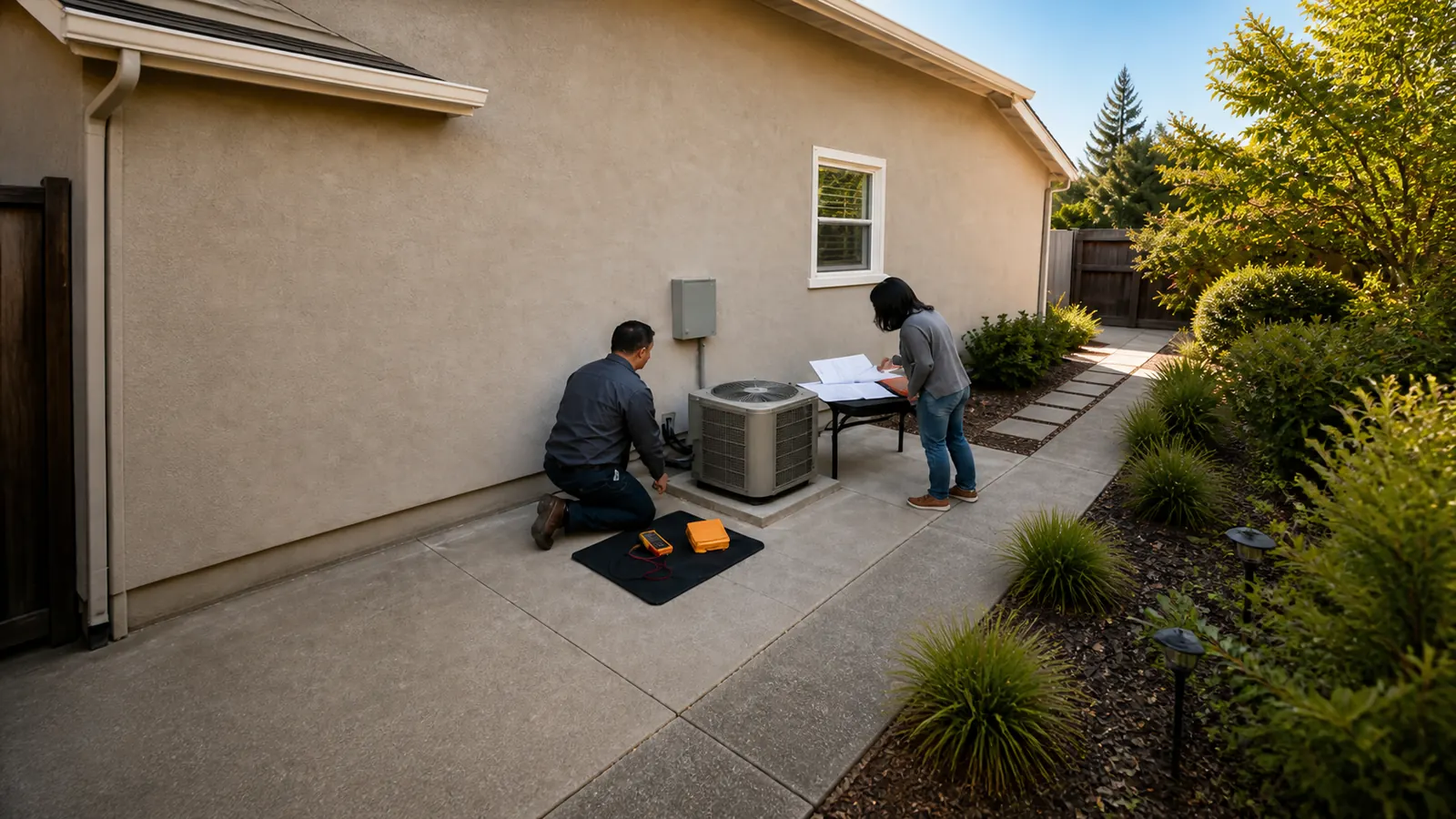
Status checked August 8, 2026. The statewide code, current CEC local-ordinance list, and live Mountain View, Palo Alto, and San Jose municipal text were checked. This guide is scheduled for recheck by December 15, 2026, before Palo Alto’s stated January 1, 2027 start date, or sooner if any jurisdiction changes its reach code.
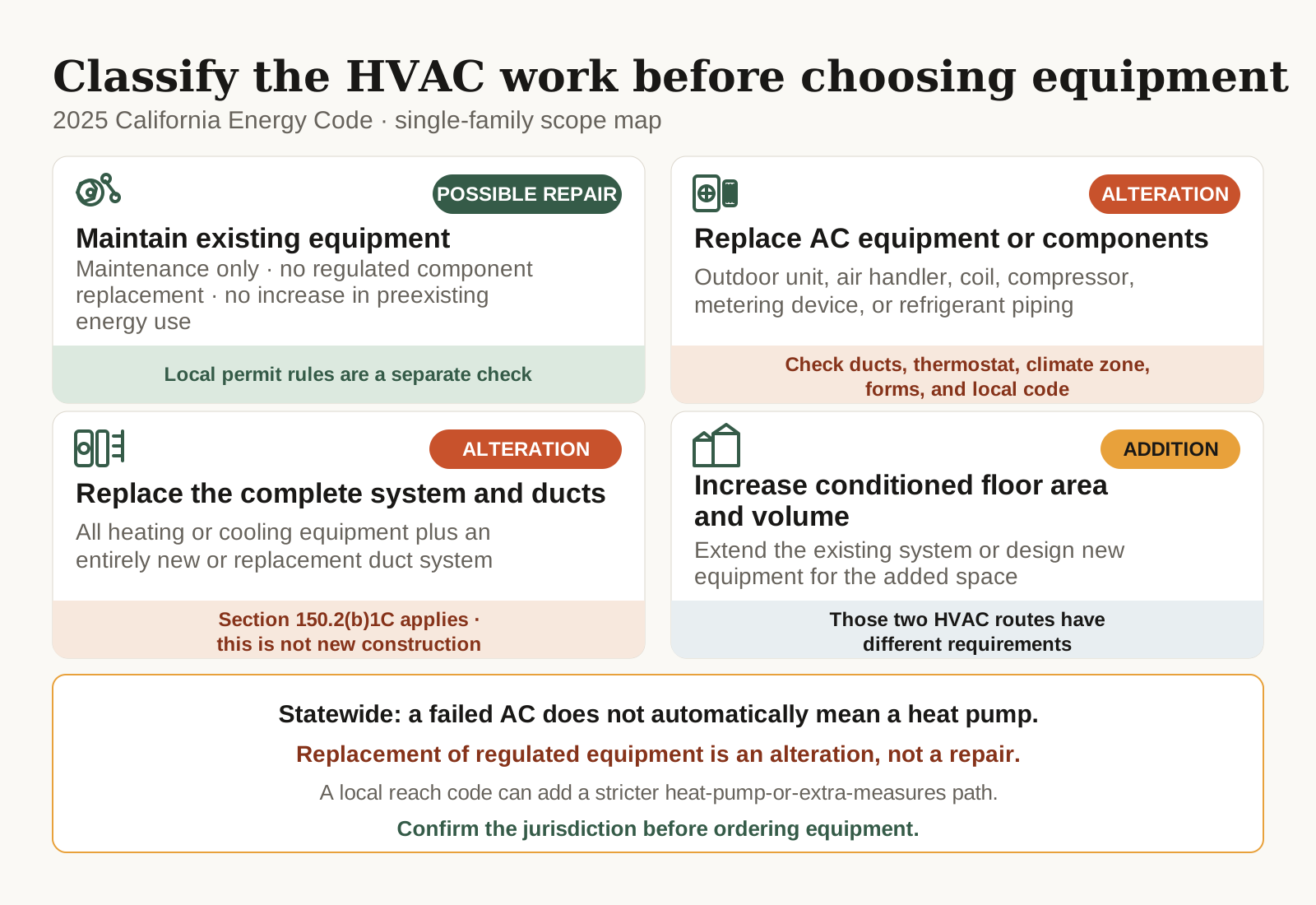
| Proposed work | Statewide classification | Heat-pump answer |
|---|---|---|
| Maintain the existing unit without replacing a regulated component | Possible repair if the work is maintenance and does not increase preexisting energy use. | Part 6 does not turn maintenance alone into a heat-pump conversion. Confirm local permit rules and the actual component scope. |
| Replace the outdoor unit, air handler, coil, compressor, or another regulated refrigerant component | Alteration | The final statewide alteration section does not itself prohibit a replacement AC. Duct, thermostat, climate-zone, testing, form, and local-code requirements can apply. |
| Replace all heating or cooling equipment plus the duct system | Complete replacement alteration | Still not automatically a statewide heat-pump mandate. Section 150.2(b)1C brings a larger compliance package. |
| Add conditioned floor area and volume | Addition | Extending an existing system and installing a new system for the addition follow different routes. The selected compliance method matters. |
| Qualifying work in a stricter local jurisdiction | Local reach code | Mountain View applies an additional path now. Palo Alto’s current text starts its comparable amendment January 1, 2027. |
Start with the final code, not the proposal
The California Energy Commission says the 2025 Energy Code applies to buildings whose permit applications are filed on or after January 1, 2026. A failed compressor in December 2025 does not select the code cycle; the permit application date does. A project with an earlier valid application can be governed differently, and a local amendment can have its own stated start date.
The final single-family alteration language is the decisive statewide source. Section 150.2(b)1F begins with an air conditioner or heat pump altered by installing or replacing refrigerant-containing components. It then assigns thermostat, airflow, and refrigerant-charge rules by equipment and climate zone. That text would make no sense as a universal ban on replacement air conditioners. It regulates them.
Why does the opposite claim circulate? A CEC code-change report proposed a voluntary CALGreen measure under which a jurisdiction could require either a heat pump as the primary heating source or an air conditioner with additional efficiency measures. The report repeatedly called the language proposed and voluntary and said it would affect jurisdictions that adopted it. Mountain View later did that. The proposal did not become a blanket mandatory Part 6 rule for every California house.
Use the July 2025 final publication, CEC-400-2025-010-F, for the statewide answer. Do not combine a proposed measure, a local adoption, and a new-construction prescriptive rule into a sentence about every failed AC. Each has a different scope.
Repair, replacement, and alteration are not synonyms
Section 100.1 defines repair as reconstruction or renewal for maintenance of an existing component, system, or equipment. The repair cannot increase its preexisting energy use. The same definition then draws a bright line: replacing a component, system, or equipment for which the Energy Code has requirements is an alteration, not a repair.
That means the diagnosis matters. Restoring an existing unit without replacing a regulated component can potentially remain a repair. Replacing the split-system outdoor condensing unit, air handler, cooling coil, compressor, metering device, or refrigerant piping moves the work into the alteration provisions. Calling an equipment swap an “emergency repair” on an estimate does not rewrite the code definition.
The Energy Code classification and the permit question are related but not identical. A local building department administers mechanical, electrical, and building permits as well as energy compliance. San Jose’s current residential HVAC page, for example, says installation or replacement of heating and cooling equipment requires an electrical permit and may also require mechanical, plumbing, or building review depending on the work. Ask the enforcement agency about the exact service scope rather than assuming “repair” means “no permit.”
What a statewide AC alteration can trigger
Replacing equipment can widen the scope beyond the metal box in the side yard. Section 150.2(b)1E says that replacing an air handler, a split-system outdoor condensing unit, or a cooling or heating coil triggers sealing of the connected duct system in all climate zones, confirmed through field verification and diagnostic testing. The section has specific exceptions for a duct system previously sealed and verified, a system with less than 40 linear feet of duct, and existing ducts constructed, insulated, or sealed with asbestos.
Section 150.2(b)1F adds the mechanical-cooling rules when refrigerant-containing components are installed or replaced. Associated thermostats must be setback thermostats. Airflow and refrigerant-charge verification apply to air-source heat pumps in all climate zones and to air-cooled air conditioners in the climate zones identified by the section. Equipment type and climate zone therefore matter. It is inaccurate to promise every South Bay AC replacement the same testing list.
The project’s accepted Certificate of Compliance, commonly called the CF1R, is the practical control document. The CEC says required field verification will appear there. For a prescriptive space-conditioning alteration, the current forms page lists CF1R-ALT-02-E. Installation forms are CF2Rs; third-party verification forms are CF3Rs. A project that requires field verification registers its documents with an Energy Code Compliance provider and coordinates an ECC-Rater.
A complete replacement system is a narrower code term than it sounds. Section 150.2(b)1C describes all heating or cooling equipment plus an entirely new or replacement duct system. That scope must meet the larger list in that section. It is still an alteration. The final text does not import the new-home prescriptive heat-pump requirement into every complete replacement alteration.
An addition asks a different HVAC question
The Energy Code defines an addition as a change that increases conditioned floor area and conditioned volume. A kitchen reconfiguration or whole-house finish remodel can be an alteration without being an addition. Conversely, a new conditioned room can bring both addition rules for the new space and alteration rules for changed components in the existing house.
If heating or cooling is extended from an existing system to serve the addition, Exception 3 to section 150.2(a) says the existing heating and cooling equipment need not comply with Part 6. The heating capacity still must satisfy the referenced Residential Code requirement. That exception can preserve an existing furnace-and-AC system; it is not permission to ignore sizing.
Ducts are a separate gate. Exception 4 says that whenever any length of duct is extended from an existing duct system to serve the addition, the existing and extended ducts must meet the applicable insulation and sealing provisions. The CEC HVAC FAQ confirms that even an extension under 25 feet brings the whole combined system into the specified leakage-testing path. A small room does not create a small-duct exemption.
If new equipment and new ducts serve the addition, the prescriptive route applies the new-home space-conditioning package, including the prescriptive heat-pump system requirement. The CEC also recognizes a performance route, which uses an approved energy model and permits tradeoffs while retaining applicable mandatory measures. Therefore “my addition forces a heat pump” is still incomplete. The answer depends on whether the existing system is extended, a new system is installed, and prescriptive or performance compliance is used.
Local reach codes can change the statewide baseline
A jurisdiction that wants to enforce an energy standard stricter than the state baseline must apply to the CEC and demonstrate energy savings and cost effectiveness. The CEC’s current 2025 approved-ordinance page is the statewide index, but the ordinance and live municipal code supply the operative details and start date.
| Jurisdiction | Status checked August 8, 2026 | What the current source supports |
|---|---|---|
| Mountain View | Active local path | For qualifying existing single-family work in Climate Zone 4, section 8.94.05 requires either a heat pump as the primary heating source or an AC that satisfies a local package. The code includes documented panel-capacity and heating-load exceptions. It is not an absolute AC ban. |
| Palo Alto | Starts January 1, 2027 | Current section 16.17.140 says its amendments apply to permit applications submitted on or after that date. A new or replacement air-cooled AC then follows the added subsection 1Fiv package or a documented exception; heat pumps follow their separate requirements. |
| San Jose | State baseline currently | Current Chapter 24.12 contains the 2025 Energy Code adoption section without an AC-to-heat-pump local amendment. A June 2026 City staff memo says Council did not move forward with the September 2025 proposal. |
| Another city or county | Verify before filing | Check the CEC approval list, the adopted ordinance, the live code, the effective-date clause, and the building department. Do not copy a neighboring city’s answer. |
Mountain View’s AC alternative is not merely “buy a more efficient condenser.” Depending on the duct configuration, its live code adds combinations of duct leakage, airflow and fan efficacy, refrigerant-charge verification, duct insulation, attic insulation, and air sealing. The two top-level exceptions require electrical or heating-and-cooling load calculations submitted before permitting. A contractor’s verbal claim that the panel is too small is not the documentation the section describes.
Palo Alto demonstrates why an approval date is not an effective date. The CEC approved Ordinance 5665 on January 21, 2026, yet current municipal section 16.17.140 expressly states January 1, 2027 for permit applications. The City’s broader building-code page says the 2025 code cycle began January 1, 2026; that general statement does not override the specific one-year delay written into this local HVAC section.
San Jose demonstrates the opposite trap: a draft is not law. Council considered an AC-replacement heat-pump proposal in 2025 and did not move forward. The current municipal code repealed the prior local energy amendment parts and reenacted Chapter 24.12 with only the 2025 state-code adoption section. Its current HVAC permit page still treats air conditioners and heat pumps as equipment categories. Recheck before filing because the City can reconsider policy later.
Build the answer from six project facts
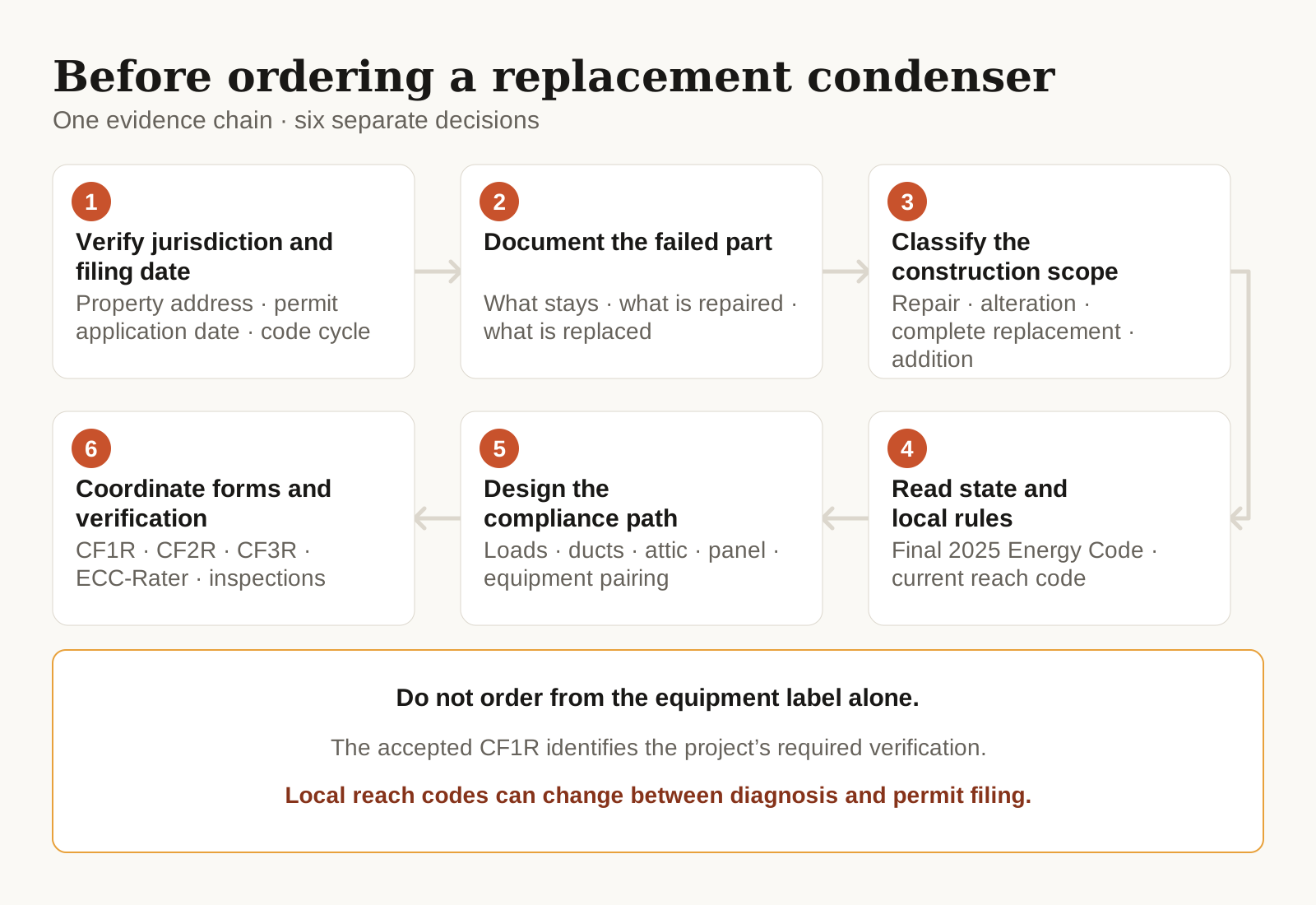
- Confirm jurisdiction and permit timing. A mailing address can sit outside a city boundary. Identify the enforcement agency and when the application will be filed. Check the state code cycle and the local section’s own effective date.
- Obtain a written diagnosis. List the failed component, what the technician proposes to keep, and every component to be replaced. “AC failed” is not a construction scope.
- Separate the remodel from the HVAC work. Mark whether conditioned floor area and volume increase, whether ducts extend, and whether a new dedicated system serves the addition. Do not treat all work under one remodel label.
- Verify the live legal sources. Read the final Energy Code, CEC approval list, adopted local ordinance, live municipal code, and current building-department material. Save the versions used for design.
- Resolve design gates before procurement. Load calculations, existing ducts, attic conditions, combustion appliances, panel capacity, equipment pairing, condensate, access, noise, clearances, and controls can change a compliant design and its construction scope.
- Coordinate documents and field verification. Align the CF1R, equipment schedule, mechanical and electrical plans, CF2R installation documents, CF3R verification documents, permit inspections, and commissioning. Do not substitute a sales proposal for the accepted compliance package.
Who owns each compliance decision
The owner chooses the project objective and authorizes the budget. The design professional or responsible energy preparer classifies the addition and alteration scope and prepares the compliance path. The licensed HVAC contractor diagnoses and installs within its license and the accepted documents. An electrician evaluates service and branch-circuit work. The ECC-Rater independently performs the verification required by the registered forms. The enforcement agency decides what it will accept and inspects the permitted work.
A general contractor coordinates those interfaces when HVAC is part of a larger remodel or addition. That coordination does not turn the GC into the building official, energy consultant, HVAC designer, electrician, or ECC-Rater. Put each decision and deliverable in the scope matrix so a duct test, attic measure, panel calculation, equipment submittal, or correction response does not appear after finishes or procurement are locked.
Use current terminology. CEC now calls the third-party program Energy Code Compliance and the verifier an ECC-Rater. Older pages and project files may say HERS. The accepted current forms, not a copied checklist from the prior code cycle, control the actual project.
Why this guide gives no universal cost or timeline
The code classification does not price the installation. Retaining a furnace, changing both heating and cooling, replacing ducts, sealing existing ducts, adding attic work, modifying a condensate route, upgrading electrical capacity, correcting access, using a local AC alternative, and coordinating an addition are different projects. Equipment availability and incentives also change. A statewide “heat-pump penalty” or “AC savings” number would hide the variables that decide it.
Permit and construction duration also depends on jurisdiction, submittal completeness, correction cycles, whether an addition is involved, load and panel documentation, ECC-Rater scheduling, equipment procurement, demolition access, inspections, and commissioning. The useful schedule shows those dependencies. It does not promise one number of days for every failed AC.
Frequently asked questions
Can I replace only the outdoor AC unit under the statewide code?
The final statewide alteration section addresses replacement air conditioners, so it does not itself create a universal AC ban. Replacing the outdoor unit is an alteration and triggers connected-duct sealing and verification unless an exception applies. Thermostat, climate-zone, equipment, local-code, permit, and compatibility requirements also need review.
Does a whole-system replacement count as new construction?
No. Section 150.2(b)1C treats all heating or cooling equipment plus an entirely new or replacement duct system as an entirely new or complete replacement system installed as part of an alteration. It carries a larger requirement set but remains an alteration.
Does a new addition require a heat pump?
Not as a universal sentence. Extending an adequate existing system uses an addition exception, while extending ducts triggers duct requirements. A new system serving the addition follows the new-system addition path; the prescriptive route uses the new-home heat-pump package, while a performance route can evaluate an alternative design.
Is Mountain View’s rule an AC ban?
No. Current section 8.94.05 provides a heat-pump-primary-heating route and an AC route with additional measures, plus documented panel-capacity and load-based exceptions. The actual duct configuration and property conditions decide which provisions apply.
Is Palo Alto’s local AC package already in force?
Not as of this article’s August 8, 2026 verification date. Current Palo Alto Municipal Code section 16.17.140 says its requirements apply to building permit applications submitted on or after January 1, 2027. Recheck before filing.
Did San Jose adopt the 2025 AC-to-heat-pump proposal?
No. A current June 2026 City staff memo says Council did not move forward with the September 2025 measure. Current Chapter 24.12 adopts the 2025 state Energy Code without that AC replacement amendment. Future policy can change, so verify again at permit intake.
Can a contractor decide that my work is only a repair?
A contractor can document the service diagnosis and proposed scope, but the code definition and enforcement agency control. Replacement of regulated equipment or components is an alteration even if the proposal calls it repair. Keep the diagnosis, permit direction, and accepted forms together.
Sources and verification
- California Energy Commission: final 2025 Building Energy Efficiency Standards, CEC-400-2025-010-F
- CEC: 2025 Energy Code effective for permit applications filed on or after January 1, 2026
- CEC: 2025 Single-Family HVAC frequently asked questions
- CEC: 2025 single-family compliance documents and current CF1R, CF2R, and CF3R forms
- CEC: approved local ordinances exceeding the 2025 Energy Code
- Mountain View City Code section 8.94.05: existing single-family mechanical-cooling alterations
- City of Mountain View: Green Building and Reach Codes implementation page
- Palo Alto Municipal Code section 16.17.140: single-family additions and alterations, including January 1, 2027 applicability
- San Jose Municipal Code Chapters 24.01, 24.10, and 24.12: 2025 code adoption and current energy chapter
- City of San Jose: Air Conditioning, Heating and Fireplaces permit guidance, updated April 7, 2026
- City of San Jose June 2026 staff memo, Attachment D: 2025 AC replacement proposal was not advanced
Every published legal or dynamic claim was checked against opened final code, live municipal text, CEC pages, or current City records. The proposal-stage CALGreen report, a conflicting compliance-manual example, San Jose draft ordinance language, search snippets, contractor articles, incentive marketing, and generic cost or timing claims were not used as controlling evidence.
General information only. This article is not legal, architectural, engineering, energy-compliance, HVAC design, electrical, rebate, tax, permit, or bid advice. Classification, equipment, loads, ducts, attic work, combustion safety, electrical capacity, refrigerant work, forms, ECC-Rater scope, local amendments, permits, inspections, price, and schedule depend on the actual property and accepted documents. Obtain written direction from the responsible licensed professionals and enforcement agency before ordering or removing equipment.