“Bathroom remodel” is not one product. It can mean replacing a vanity and floor while leaving the wet area alone. It can also mean rebuilding a shower, moving drains, changing walls, and coordinating several inspections. A useful budget starts by naming which of those scopes you mean.
No current public source we reviewed supplies a representative, scope-matched set of signed 2026 San Jose bathroom-remodel contracts. This guide answers the cost question without manufacturing that missing dataset. It triangulates two independent types of current evidence, keeps the assumptions beside the numbers, and records what the sources cannot prove.
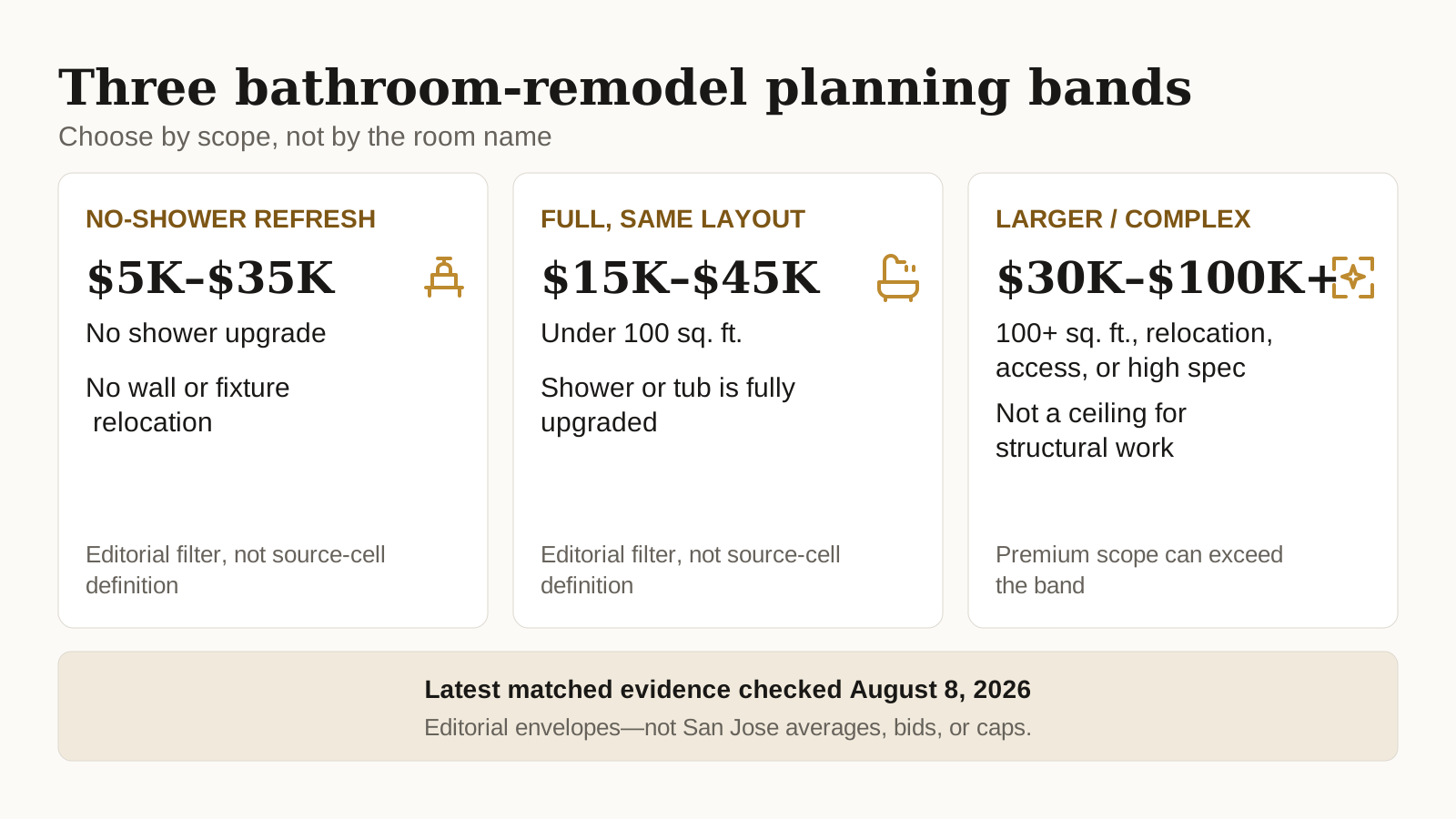
Three 2026 bathroom-remodel planning bands
| Editorial planning band | Planning range | Use it when |
|---|---|---|
| No-shower refresh | $5K–$35K | The shower stays, and no wall or fixture is relocated. Price any tub work separately because the source cell does not isolate it. |
| Full, same-layout bath | $15K–$45K | The room is under 100 square feet, the shower or tub is fully upgraded, and fixture locations remain. |
| Larger or complex remodel | $30K–$100K+ | The room is 100 square feet or larger, or the scope includes relocation, accessibility work, expansion, or high-spec selections. |
The overlaps are intentional. A compact bathroom with custom tile, a curbless shower, or extensive substrate repair can cross the larger-project band. A bigger room with restrained products and an unchanged layout can stay below it. Choose by actual scope, then replace the range with a written estimate tied to the address.
How the source envelope was built
The newest Houzz report does not publish the older no-shower category, so the most recent matched cell for the first band remains the 2025 U.S. Houzz Bathroom Trends Study's table of 2024 spending. It defines “minor” only as no shower upgrade; that definition does not exclude tub work, fixture relocation, or structural work. The smaller-bath minor median was $5,000. The overall minor 90th-percentile threshold was $28,000, and the larger-bath threshold was $34,600. Taking those available edges and rounding outward produces $5,000–$35,000. The no-relocation condition is an editorial use filter, and any tub work still needs its own scope.
The 2026 U.S. Houzz & Home Renovation Trends Study reports 2025 primary-bath spending. Its “major” definition is replacement of at least the vanity or cabinetry, countertops, and toilet—not the shower definition used by the older bathroom report. For major primary baths under 100 square feet, it reports an $18,000 median and a $44,000 90th-percentile threshold. The 2025 JLC Cost vs. Value San Francisco page models a complete 5-by-7-foot midrange bath at $32,160. Rounding the current Houzz edges outward yields $15,000–$45,000. A full wet-area rebuild and unchanged fixture locations are editorial filters for using this band, not parts of Houzz's definition.
For major primary bathrooms at least 100 square feet, the current Houzz study reports a $30,000 median and a $75,000 90th-percentile threshold. JLC models a 5-by-7-foot universal-design scope at $52,228. Its upscale model expands a 35-square-foot bath to 100 square feet inside the existing house, relocates every fixture, and adds premium features; the San Francisco modeled cost is $97,394. Rounding outward gives $30,000–$100,000-plus. No sources were averaged, no 2026 inflator was applied, and no San Jose multiplier was invented.
Choose the band by scope, not finishes alone
- No-shower refresh. Use this only when the shower stays and no wall or fixture is relocated. Houzz's matched source cell does not isolate bathtub work, so define any tub work separately instead of assuming it is included or excluded. Also state whether the proposal replaces the vanity, top, sink, faucet, toilet, mirror, lighting, fan, flooring, paint, trim, and accessories; who buys each product; and whether removal, disposal, delivery, installation, patching, and applicable tax are included.
- Full, same-layout bath. Use this when the wet area is rebuilt but the shower, tub, toilet, and sink stay in their existing locations. Write down the waterproofing system, tile extent and pattern, niche or shelf, glass, valve and trim, tub or pan, vanity width, counter, fixtures, lighting, fan, and finish allowances. “Complete bathroom” is not enough detail for proposal comparison.
- Larger or complex remodel. Use this when the bathroom is at least 100 square feet or the work changes walls, expands into adjacent space, relocates fixtures, creates a curbless layout, or uses high-spec products. The published band is a source envelope, not a ceiling. Structural design, utility rerouting, custom glass or cabinetry, premium stone, or difficult access can move the project beyond it.
Keep unresolved conditions out of the product allowance
A tile allowance answers what finish is being purchased. It does not answer what happens if demolition exposes a damaged subfloor, inadequate framing, an incompatible drain, or prior unpermitted work. Ask the proposal to state which existing conditions are assumed, how concealed conditions are documented, who prices the response, and whether work pauses for written authorization.
A single generic contingency percentage is not evidence-based for every bathroom. A better early plan identifies known selections, provisional scope, genuine unknowns, and the point at which investigation or demolition can replace each assumption. Keep the planning band broad until that work is done.
San Jose permit path: the scope controls
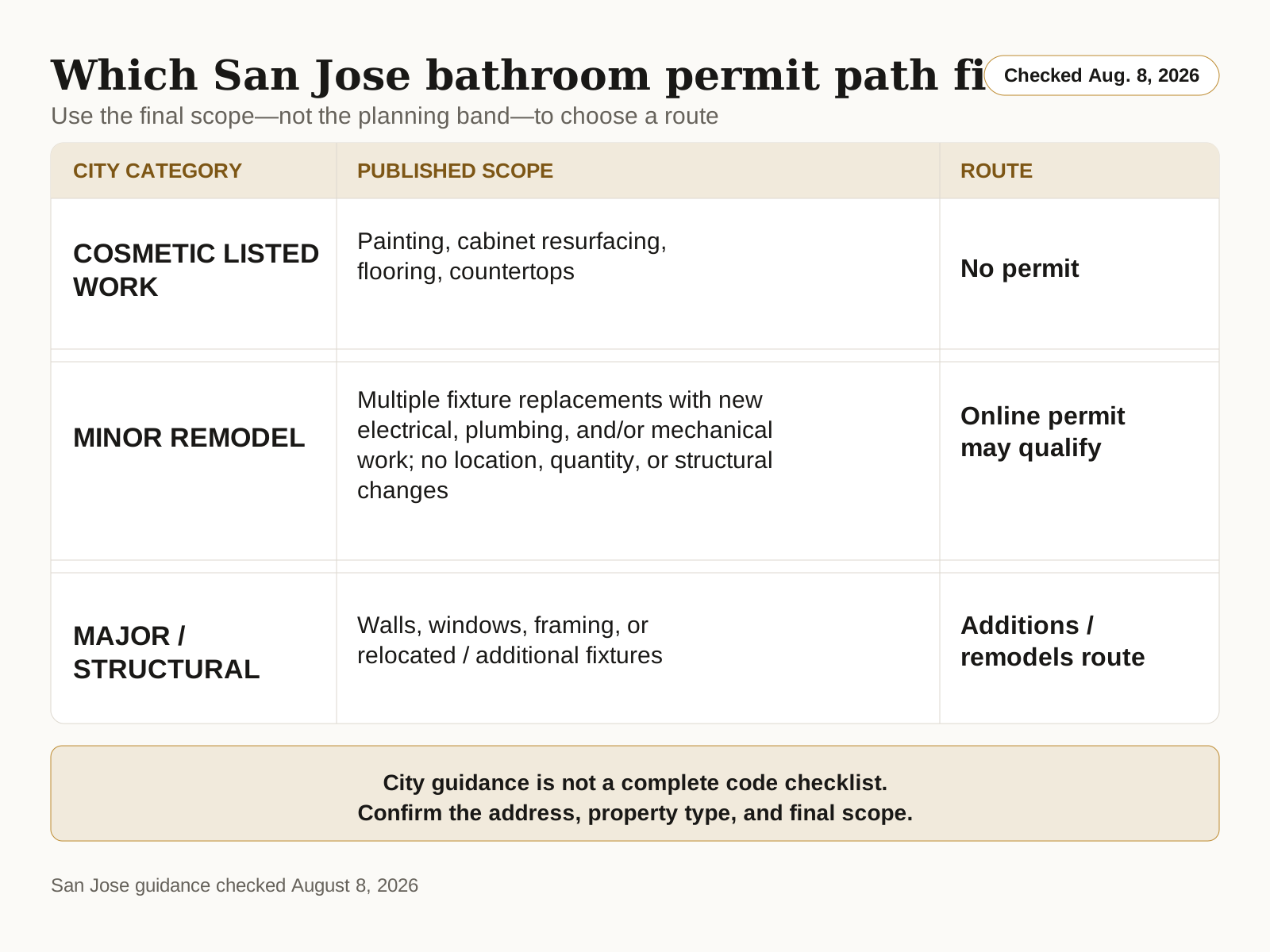
The City of San Jose's current kitchen and bathroom page, updated April 13, 2026, separates listed cosmetic work, minor remodels, and major remodels. The planning band does not determine the permit route.
| City category | Published scope | Route |
|---|---|---|
| Listed cosmetic work | Painting, cabinet resurfacing, new flooring, and new countertops. | The City lists these as not requiring a permit. |
| Minor remodel | Multiple fixture replacements with new electrical, plumbing, and/or mechanical work, without location, quantity, or structural changes. | May qualify for an online permit. |
| Major remodel | Walls, windows, framing, or relocated or additional fixtures. | Use the additions and remodels route; plans and review are required for structural work. |
Code details that can change the plan
San Jose states that the 2025 California code set applies to permit applications made on or after January 1, 2026. Its current minor-bathroom checklist calls for at least one bathroom luminaire with automatic-off control; a shower pan of at least 1,024 square inches with no finished dimension under 30 inches; at least 22 inches of unobstructed shower-door opening; toilet clearance of at least 15 inches from centerline to a wall or barrier on each side and 24 inches in front; and mechanical ventilation ducted outdoors for bathrooms with a tub or shower, with a listed minimum of 50 CFM and Energy Star compliance.
Those figures are useful design checks, not permission to design from one paragraph. Product instructions, electrical, plumbing, mechanical, energy, structural, accessibility, and property-specific conditions may add requirements. The City expressly says its list is not comprehensive.
Why this guide gives no generic permit fee
San Jose's fee page says its beta estimator currently covers ADUs, commercial tenant improvements, and new single-family homes. For other project types, the City directs applicants to submit its Permit Cost Estimate Worksheet to staff. A fixed “bathroom permit fee” would therefore be invented.
Ask each proposal to state who prepares any drawings, files the application, answers review comments, schedules inspections, and pays City charges. Keep contractor coordination, professional design services, and agency fees distinct. The City fee page and estimator coverage were rechecked September 1, 2026: the page still links the August 11, 2025 schedule, and the estimator still omits a generic bathroom-remodel option. The next City and statutory review is December 1, 2026, or sooner if either source changes; no recurring annual fee-cycle rule is inferred.
Contract and tax rules do not set the project price
The California Contractors State License Board says a home-improvement project over $500 requires a written contract. Business and Professions Code section 7159 governs that contract and its change-order form; section 7159.6 separately governs extra work and change orders. Together, they call for written authorization before changed work and require the order to identify its scope, added or subtracted amount, and effect on progress payments or the completion date. Section 7159.6 also preserves possible legal or equitable recovery to prevent unjust enrichment when its formal requirements are not met. The contract should identify the project and significant materials, price, approximate start and completion dates, payment schedule, and permit responsibility. For a bathroom, that is where vague words such as “tile,” “glass,” or “fixtures” should become measurable selections or allowances.
Under the ordinary rule in section 7159.5, a down payment cannot exceed the lesser of $1,000 or 10 percent of the contract amount. Except for that down payment, a contractor generally may not request or accept more than the value of work performed or materials delivered. Section 7159.5(a)(8) contains a narrow exception for registrar-approved performance-and-payment bond protection, an approved equivalent, or approved joint control covering full performance and payment. The article keeps that exception visible rather than turning a common consumer rule into an absolute.
A change order should be signed before changed work begins and identify scope, added or subtracted cost, and the effect on payments or completion. That process is especially important after demolition. It cannot eliminate concealed conditions, but it prevents a newly discovered condition from becoming an untraceable verbal addition.
The current rate is a verifiable fact; a universal tax add-on is not. California Regulation 1521 says a contractor is generally the consumer of materials furnished and installed, but the retailer of fixtures. It also provides circumstances in which a contractor is treated as the retailer of materials; for fixtures, the stated sale price or, when none is stated, the contractor's cost price controls the tax measure. Owner-purchased products are separate retail purchases. For budgeting, confirm the product, buyer, contract terms, and tax presentation instead of adding 10 percent to labor and every other line.
Compare bathroom proposals on one scope sheet
| Lock before comparison | What the proposal should answer | Common ambiguity |
|---|---|---|
| Wet-area assembly | Demolition extent, substrate, waterproofing system, pan or tub, tile extent, niche, valve, glass, testing, and inspections. | “New shower” with no assembly or boundary. |
| Fixtures and finishes | Named products or allowances for vanity, top, sink, faucet, toilet, tile, trim, mirror, lighting, fan, accessories, and hardware. | “Standard fixtures” with no value or specification. |
| Trade and permit scope | Electrical, plumbing, mechanical, framing, documents, submittal, City charges, inspection coordination, and correction responsibility. | “Permit by owner” without describing the work behind it. |
| Protection and restoration | Dust control, route protection, shutoffs, demolition, disposal, wall and floor patching, paint boundaries, cleanup, and daily access. | Adjacent-room restoration is absent from both inclusions and exclusions. |
| Money and changes | Contract total, applicable tax treatment, allowances, exclusions, payment milestones, and signed change-order process. | A large early payment or verbal-only extras. |
If paid work will disturb paint in pre-1978 housing, the U.S. EPA's Renovation, Repair and Painting program may apply. EPA says covered renovation firms must be certified and use lead-safe practices; its minor-repair exception is generally no more than six square feet of disturbed interior paint per room, while demolition of painted surfaces and window replacement remain covered regardless of that area threshold. Do not invent one lead allowance before the age, surfaces, and work are known.
Also reconcile every proposal against the same owner-purchased list. A faucet ordered online may shift procurement, delivery inspection, warranty handling, missing parts, storage, and schedule risk back to the owner. The point is not that one purchasing model is always better. It is that two totals are comparable only when those responsibilities match.
What the evidence cannot support
The sources cannot establish a 2026 San Jose average, median, or “going rate.” The 2026 Houzz & Home report has 20,358 total U.S. respondents and uses subsets of 19,375 U.S. homeowners and 10,176 who renovated a primary residence in 2025, but it does not disclose a respondent count for each bathroom dollar cell. The separate 2025 Bathroom Trends survey had 1,738 respondents who included completed, current, and planned projects; its spending tables are footnoted to the 2025 Houzz & Home Study, so 1,738 cannot be assigned to those dollar cells. Houzz's no-shower evidence is 2024 spend, its current primary-bath evidence is 2025 spend, and the two reports use different “major” definitions. JLC uses itemized standardized estimates and local cost data for exact model scopes; it does not collect a representative set of signed San Jose bathroom proposals.
The evidence also cannot support a universal permit fee, contingency percentage, construction duration, return on investment, or neighborhood multiplier. JLC's own interpretation page warns that small changes in area, scope, finishes, and accessories can change price materially. Its resale estimates answer a different question and are not used here as a promise of value.
Questions San Jose homeowners ask
Can a bathroom project cost less than $5,000?
Yes. The $5,000 edge comes from outward rounding of Houzz's $5,000 median for minor bathrooms under 100 square feet. That source is not filtered by contractor delivery. A single product swap, owner-installed work, or DIY project can fall below the band. It is not a contractor-price floor.
Is a $50,000 bathroom automatically high end?
No. That total is above this guide's $45,000 smaller same-layout planning edge but inside the larger or complex envelope. Room size, shower assembly, tile extent, accessibility details, plumbing locations, custom products, site access, concealed work, and proposal inclusions determine what it represents.
Does replacing a bathroom countertop require a San Jose permit?
The City lists new countertops among cosmetic work that does not require a permit. If the overall project includes regulated electrical, plumbing, mechanical, location, quantity, or structural changes, use the complete scope to select the route. One cosmetic line does not exempt unrelated work.
Should I add 10% tax to the entire bid?
No. San Jose's total sales and use tax rate is 10.000%, but CDTFA distinguishes materials from fixtures and makes contract form relevant. Ask the contractor to state what applicable tax is included; do not multiply the rate by the whole contract.
Sources and verification
The linked price sources were opened and checked August 8, 2026. The price sources report 2024 matched no-shower spend, current 2025 primary-bath spend, and 2025 standardized costs; none is relabeled as 2026 San Jose observations. The City fee page and estimator scope were rechecked September 1, 2026 and remained unchanged. The next City and statutory review is December 1, 2026; annual price-evidence review remains January 20, 2027, or sooner if newer matched evidence appears. Permit, code, contract, tax, and EPA claims also receive quarterly and event-triggered review.
- Houzz: 2026 U.S. Houzz & Home Renovation Trends Study: 2025 primary-bath spending, current major definition, size bands, population, and limitations; and 2025 U.S. Bathroom Trends Study: the most recent matched no-shower spending cells, their 2024 spend year, survey-method distinction, and limitations.
- JLC: 2025 Cost vs. Value, San Francisco; model scopes for midrange, universal design, and upscale; plus methodology and interpretation limits.
- City of San Jose: Kitchen & Bathroom Minor Remodels; Additions & Remodels; adopted codes; and building permit fees.
- CSLB: Home-improvement contracts and California Business and Professions Code sections 7159, 7159.5, and 7159.6: written contracts, change-order authorization and content, payment rules, and the statutory qualifications retained in the article.
- CDTFA: Explanation of tax-rate changes, current city rates, construction-contractor tax guide, and Regulation 1521: San Jose's effective date, current rate, and the materials, fixtures, and taxable-measure distinctions.
- U.S. EPA: Renovation, Repair and Painting Program for contractors: paid renovation work, pre-1978 housing, firm certification, and the minor-repair threshold and exclusions.
This guide provides general construction-planning information. It is not a bid, tax opinion, legal advice, appraisal, return projection, or address-specific code determination. Costs, site conditions, product choices, contract terms, tax treatment, and agency requirements vary. Confirm the final scope with qualified professionals and the applicable City, state, tax, licensing, HOA, and environmental authorities.